


Previous Story
September At The Substation
Posted On 10 Nov 2015
Comment: Off
The annual SeptFest sees various events ranging from performance installations to art exhibits being featured at The Substation — Singapore’s first contemporary arts house — and other supporting venues. Lifestyle Writer Claudia Chong checks out two events that SeptFest has to offer, as The Substation celebrates its 25th anniversary this year.
By Claudia Chong
Located in the heart of Singapore’s city centre, The Substation celebrates the arts, music and literature, while functioning as a performance space. In commemoration of its 25th anniversary, this year’s SeptFest saw a lineup of events showcasing its history, including a curated exhibition with a unique layout, and a performance installation that redefined audience-performer boundaries.
Making Space: 25 Years of The Substation
National Library Building, Level 7 Promenade
100 Victoria Street, S18806416 September – 16 November 2015
Opening Hours:
10am – 9pm
Curated by Debbie Ding
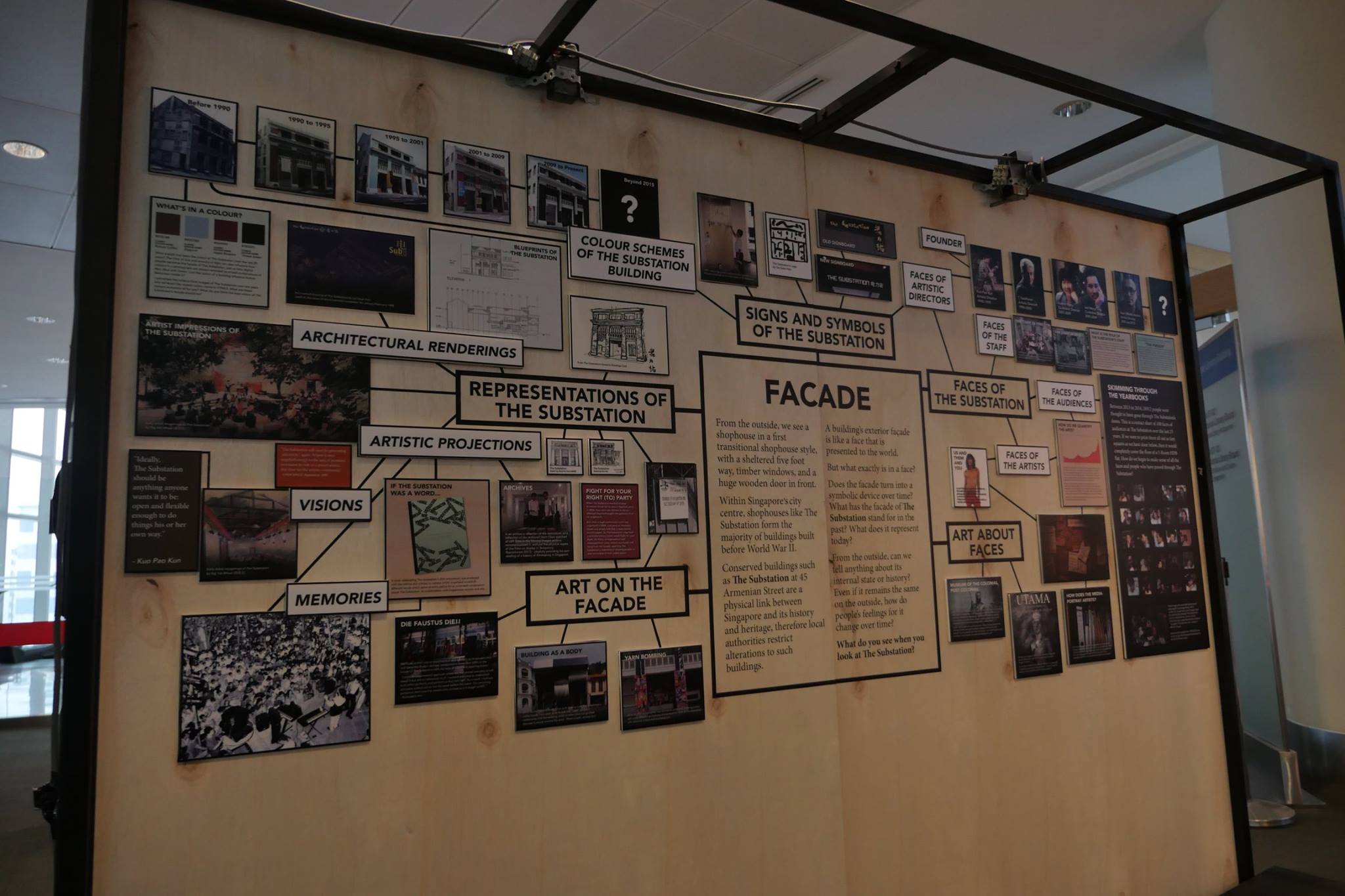
The first thing that struck me was the layout of the exhibition — it mimicked the shophouse layout of The Substation.
Making Space brings together 25 years of curated material. Each wall in the exhibition is named after a physical feature of The Substation, with details related to that element written on the wall in the form of a mind map. I felt as if I were physically going through The Substation, dissecting its history with every step.
PHOTOS: DEBBIE DING
My favourite was the Facade wall, which explored the architectural renderings of the arts house over the years. I was surprised to find out that the building itself had been used as a canvas for art several times throughout its existence — including an instance where it was covered in colourful knitted and crocheted yarn by mother and daughter duo Momshoo.
PHOTOS: DEBBIE DING
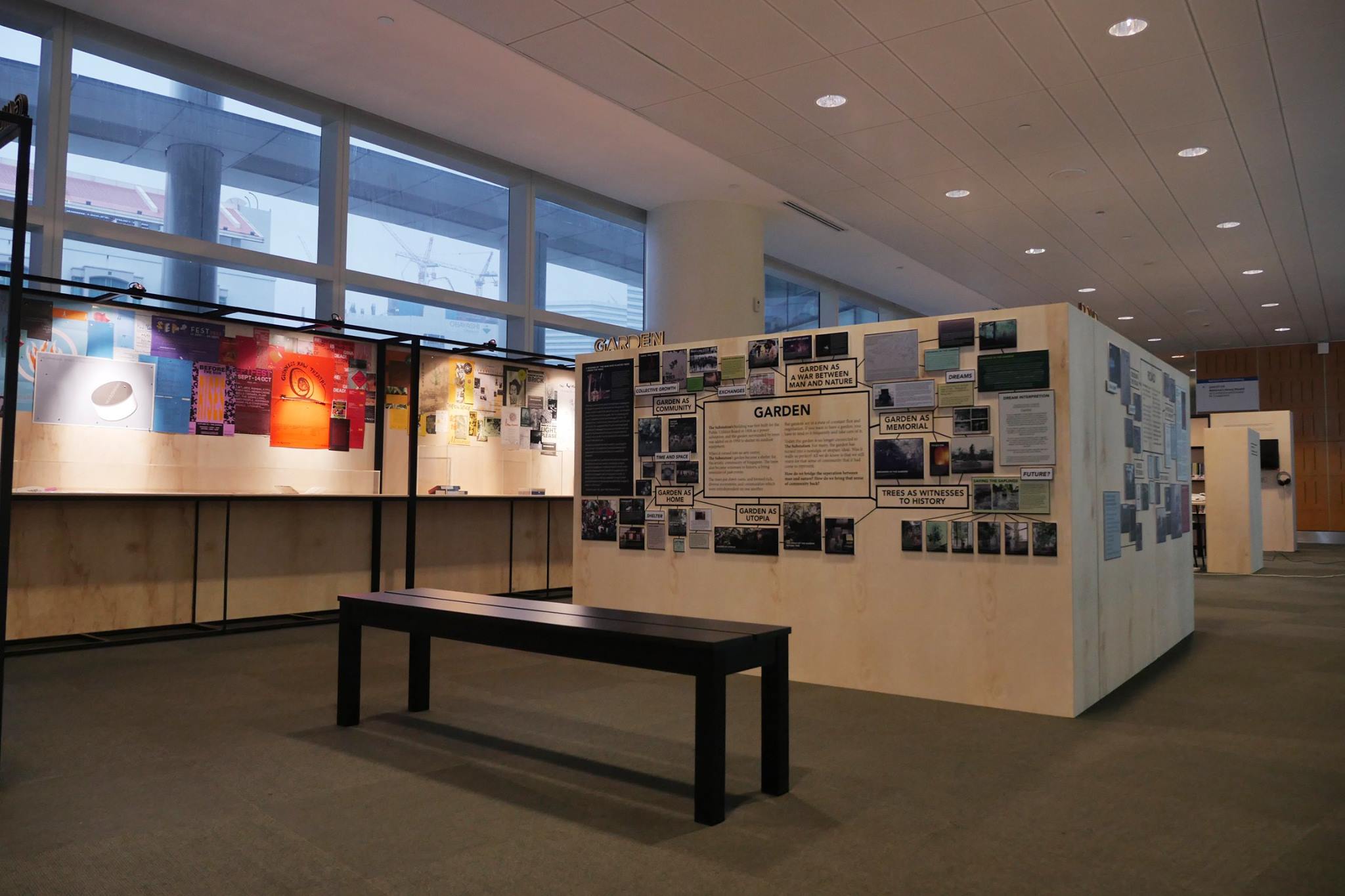
I particularly liked that Making Space is as concerned about the future as it is about the past.
One of the pertinent questions that the exhibition highlighted involves the kind of role technology can play in the future of arts. The Gallery wall features old photographs of The Substation that were run through a computer system. After analysing the visual characteristics in the photo, the system produced a prediction of what the space could be like in the future.
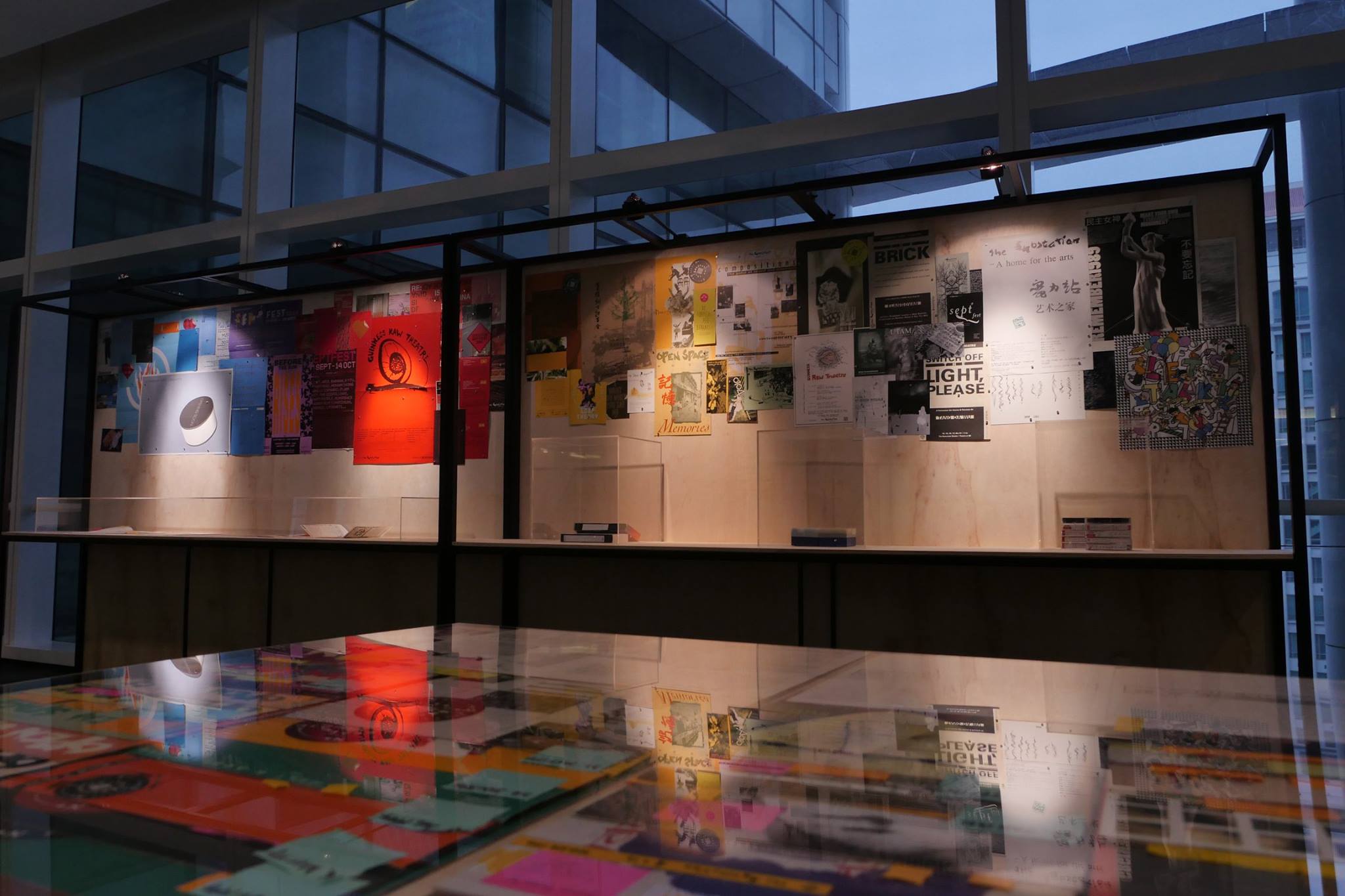
Juxtaposed against this use of modern technology were cassette tape recordings of Substation events and conferences, displayed in glass cases in a separate section. That such seemingly ancient technology was used only about two decades ago, and recorded multiple past Substation events, is almost impossible to fathom.
PHOTOS: DEBBIE DING
Tucked away at one corner of the exhibition was the Substation Archive Retrieval Unit, made up of three Archival Machines that dispense tidbits on The Substation’s history.
The particular piece I got was of a short write-up on a ‘Making Sense of Making Art’ workshop, conducted back in September 1996. I tore off the slip of paper and kept it safely in my wallet, glad that I could take home a piece of Substation history with me.
Bunny
The Substation Theatre
45 Armenian Street, S17993618 September – 19 September 2015
Choreographed by Daniel Kok and Luke George
A radio. A vacuum cleaner. A potted plant. A mattress. Two men.
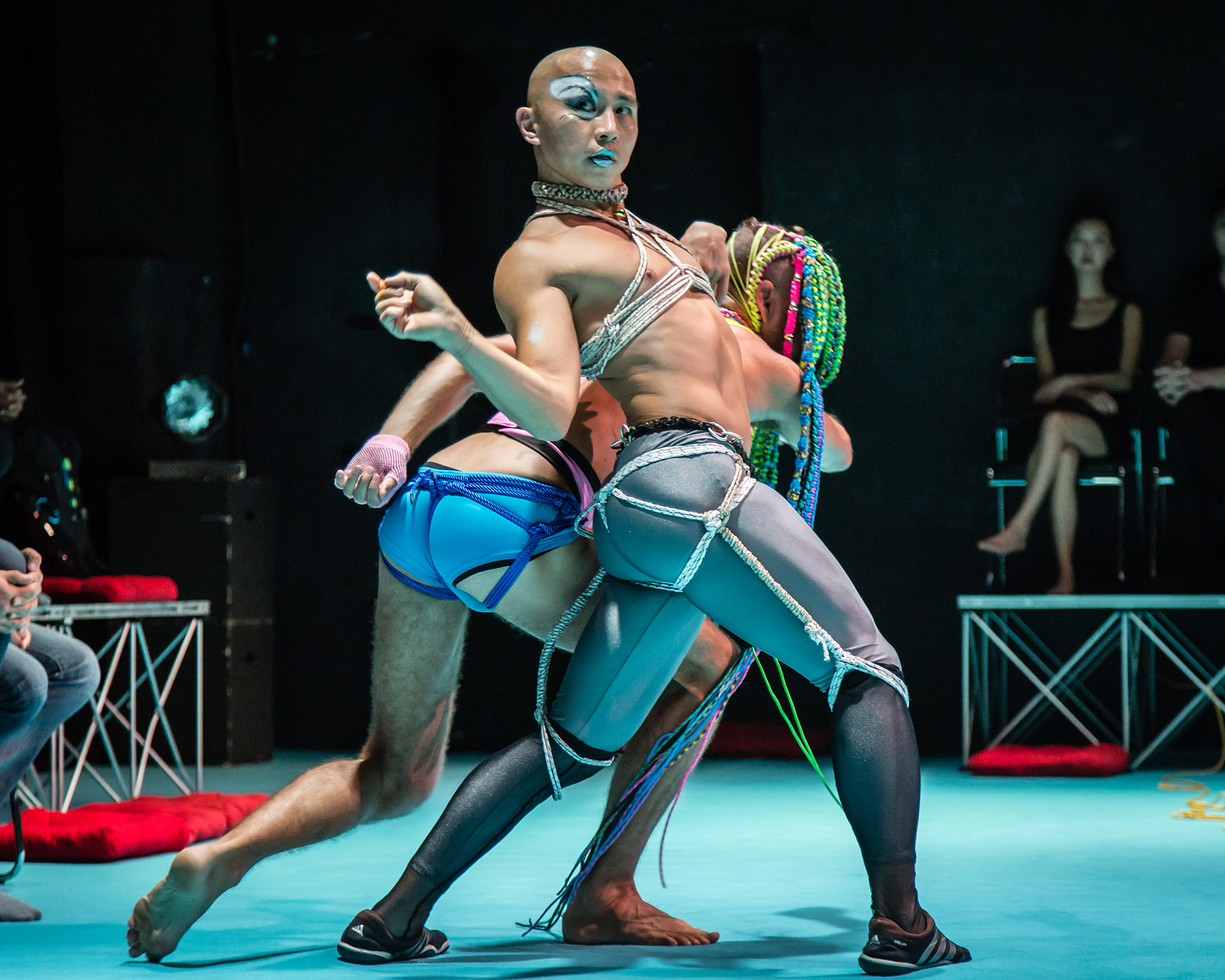
This might sound like a typical living room setting, save for the fact that everything was tied up in bright, colourful neon ropes complexly woven together.
One of the two men was suspended from the ceiling in an intricate web, while the other was incapacitated on the floor — both in contorted positions. The colours, the convoluted knots, and the stark positions of the two people made for a truly strange visual feast.
And that was how Bunny began. A performance-art installation that incorporates dance, it explores power play and performer-audience dynamics. Bunny strips away all notions of the ordinary and has no qualms about unsettling its audience.
The room was still with an uncomfortable tension for several moments before the man on the floor finally broke the silence.
“Could you give him a little spin, please?” he asked, gesturing to his fellow performer who was suspended in the air. “Just a gentle one.”
The young man who was picked out of the audience seemed startled, but nonetheless did as he was told.
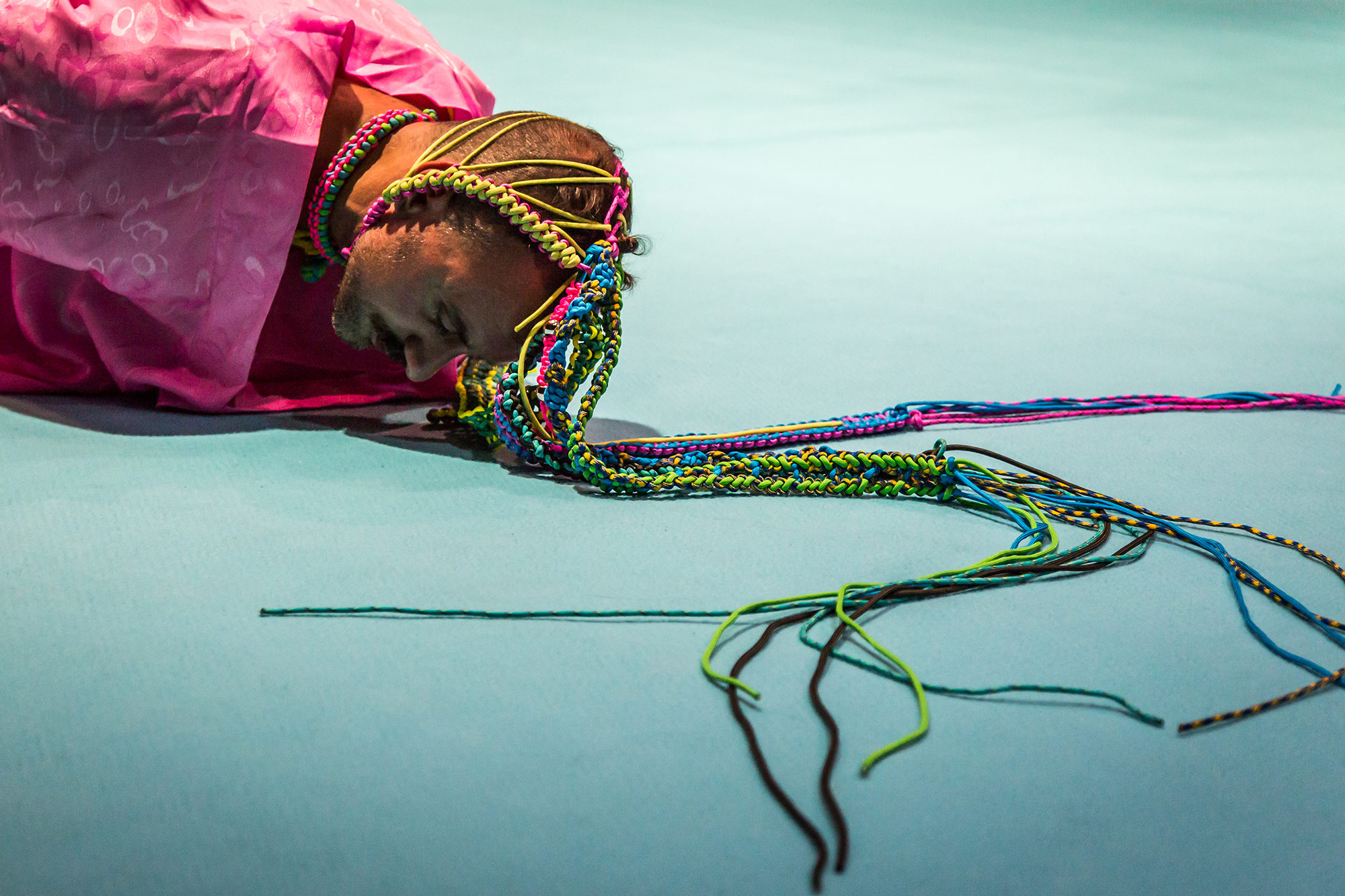
The efforts to literally draw in members of the audience continued throughout the performance. In one instance, I was politely asked to adjust the performer’s headgear made of woven ropes. I fumbled awkwardly with it while he gazed at me intensely, his face uncomfortably close to mine.
Once the performers were free of their bonds, other members of the audience were led forward to have their wrists or body bound in sophisticated knots. While they did not seem unwilling to participate, anxiety from being completely immobilised by another person was evident on their faces.
PHOTOS: SUBSTATION
The highlight of the performance came when a young man in the audience consented to being tied up in an intricate web of ropes, and suspended, contorted, in the air like the performer initially was.
It was particularly significant to me, because it demonstrated both the performer’s expertise in the art of knots, as well as the closest intimacy with an audience member. The shift in power within the room from audience to performers was almost tangible. It was likewise mindblowing to fathom that such a seemingly complex arrangement was executed in a matter of minutes.
Performer Daniel Kok, 39, revealed that he and his co-performer went to a rope dojo in Sydney after having conceived of the idea of using ropes in their performance. From there, they delved into the art of macramé (a form of textile-making using knotting rather than knitting or weaving), Chinese knots, and shibari (Japanese artistic rope bondage).
“We got hooked immediately and got a teacher to give us a private training session. Then, we found lots of resources online and in books,” said Mr Kok.
PHOTOS: SUBSTATION
Mr Kok added that the performance installation will seek to further challenge the personal boundaries between people.
“Over the coming months, we will continue to push the levels of tension further to a point of precariousness,” he said.
All in all, Bunny brought me out of my comfort zone and made me question issues of personal space. Despite that, I thoroughly enjoyed how nerve-racking but intimate the entire experience was.


