


Previous Story
Minister Shanmugam: Time to focus on SG100
Posted On 28 Mar 2016
Comment: Off
By Karl Lim, Lim Ching Ying
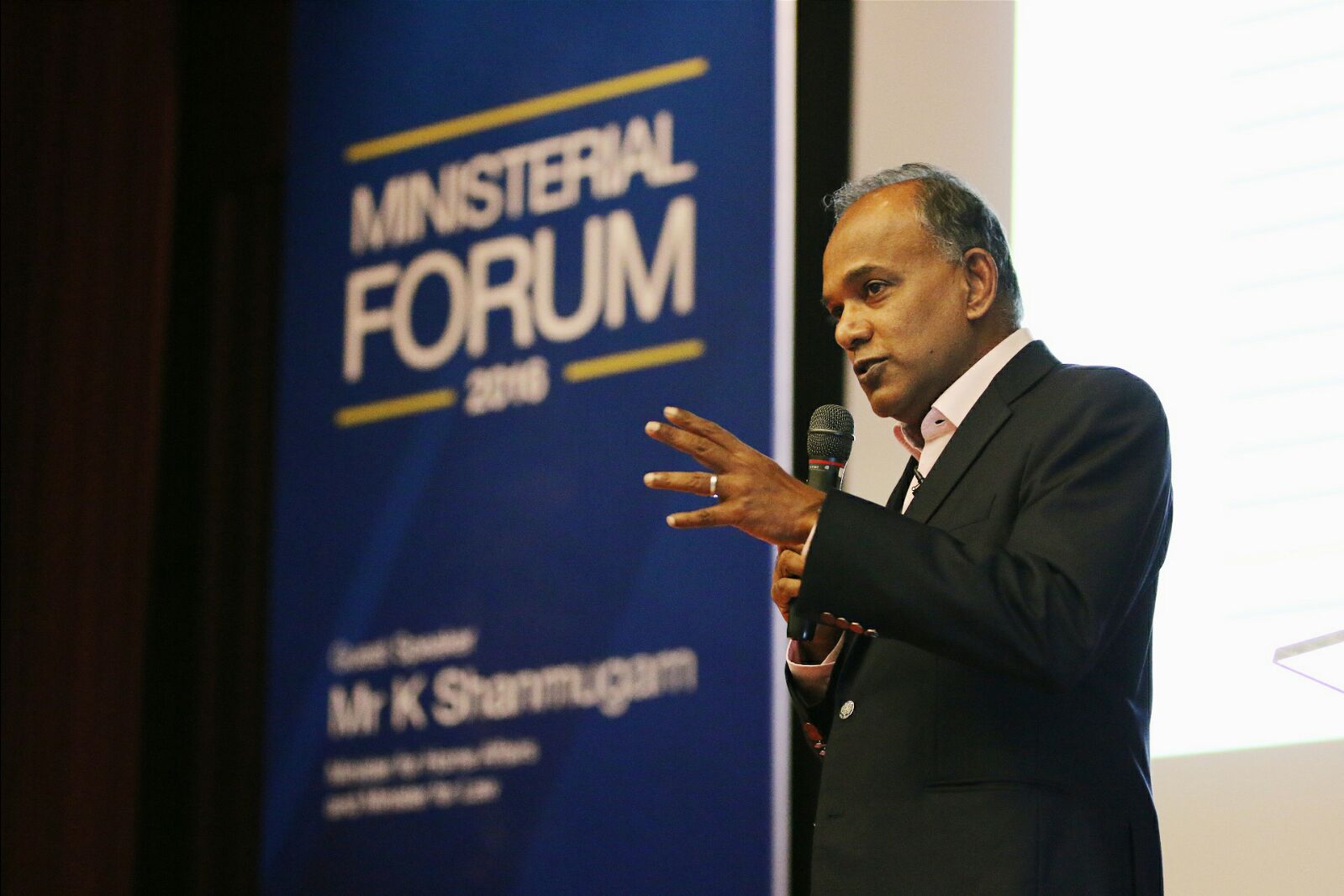
Minister Shanmugam talks about the challenges and opportunities the country is facing after celebrating its jubilee. (PHOTO: NICHOLAS YEO)
Singapore has just marked its jubilee year, but it’s time to look toward SG100, Minister for Home Affairs K Shanmugam told students on Monday night.
Mr Shanmugam, who also holds the law portfolio, addressed an audience of over 400 at this year’s Ministerial Forum, an annual event held at the School of Art, Design and Media auditorium.
Sustainability in the face of an ageing population, fiercely growing regional competition and threats to national security was the common thread in his hour-long address to local university students, faculty members and members of the public.
“Whatever we do now, in terms of policies, should take into account what is going to happen to you in 15 and 20 years,” he said, emphasising the irreversibility of key decisions on expenditure.
The minister, who arrived at 7.30pm, began his speech by introducing Singapore’s $7 billion budget deficit as a “sobering reality” that the younger generation must consider.
“Where we are today, the wealth, the success, the economy, don’t take any of it for granted,” he said.
He also addressed terrorism, an issue weighing on many Singaporeans’ minds after his warning two weeks ago regarding the inevitability of attacks.
The minister, who is also MP for Nee Soon GRC, urged citizens to remain vigilant and take ownership of their own security even as SGSecure, a new national initiative to train citizens to deal with crisis, is rolled out later this year.
“The moment we allow negative feelings to be open and public, or even have them, it will create a divide,” he said, reminding the audience of the importance to stay united as a community. “When there is a divide, that is when ISIS gets its recruits.”
Audience members had their chance to address the minister in the question-and-answer session that followed.
Some of the issues raised by students were the death penalty, environmental sustainability, citizen reactions to government policies, and the dilemma between long-term benefits and short-term popularity.


