


Previous Story
NTU keeps an eye on Zika
Posted On 10 Oct 2016
Comment: Off
By Gracia Lee
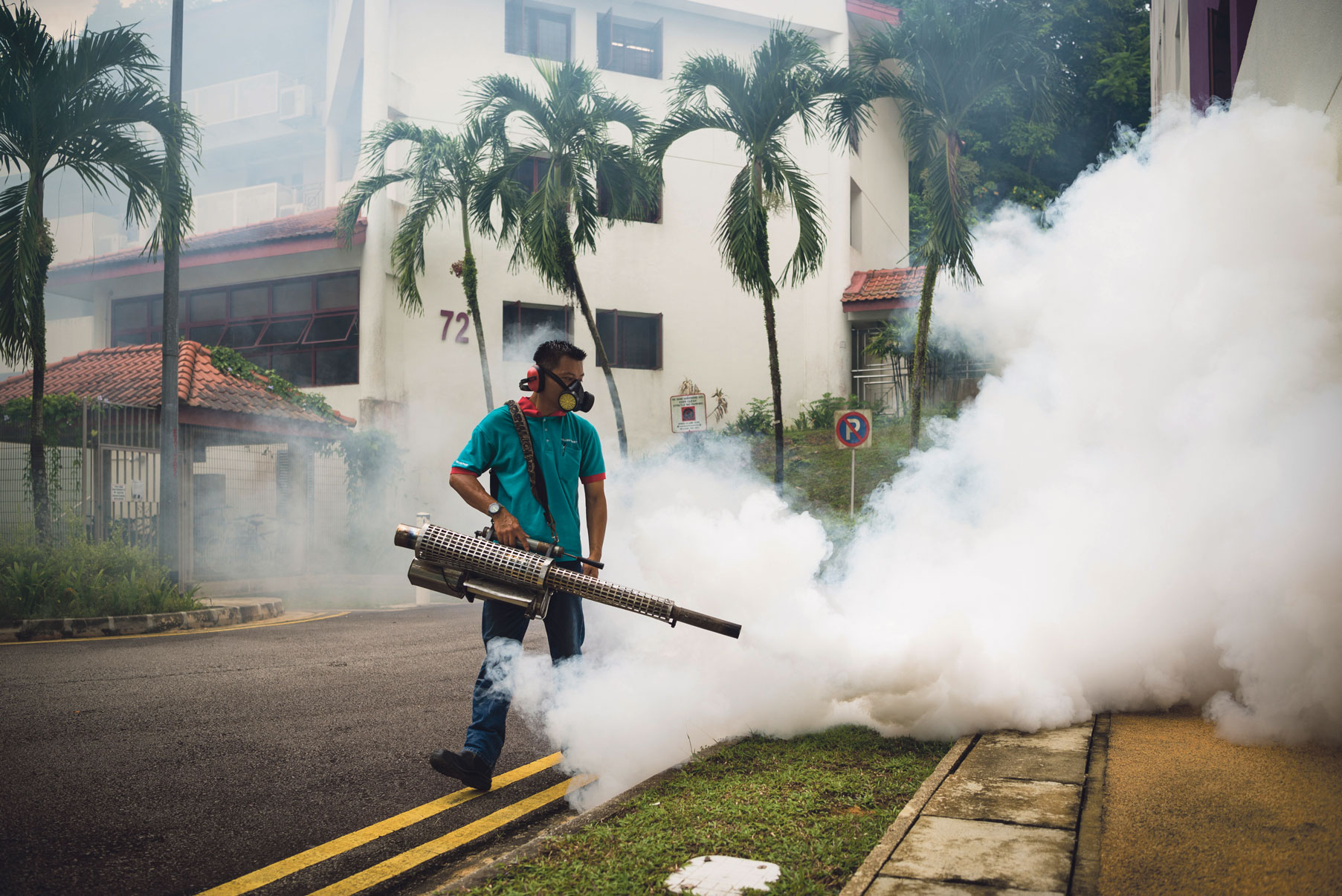
The University’s Office of Development and Facilities Management has implemented several measures to prevent the spread of Zika on campus, including inspections of construction sites, fogging at residential halls and Nanyang Lake, and oiling – pouring a thin layer of oil onto water puddles to kill mosquito larvae. PHOTO: ZHENG JUNCEN
The University has ramped up its anti-mosquito measures and urged students to take precautions, as experts warned the campus is vulnerable to the Zika virus.
NTU’s population density, combined with a concentration of possible breeding sites, makes it a high risk area for infection, said Infectious Diseases Professor Annelies Wilder-Smith from the Lee Kong Chian School of Medicine.
Considering the amount of human traffic on campus, one mosquito can easily infect several people within a day.
Construction sites, which can be found along Nanyang Crescent and the new North Hill cluster, are also potential breeding grounds for the Aedes mosquito, Prof Wilder-Smith also said.
As of last week, 393 cases of Zika have been reported in Singapore. Thirty-seven of these cases were reported to have stemmed from one construction site at Sims Drive.
Anti-mosquito measures
On campus, the Office of Development and Facilities Management (ODFM) has instituted mosquito surveillance systems at construction sites.
The ODFM also does weekly oiling, or pouring a thin layer of oil on top of water puddles to kill mosquito larvae, at these sites.
In addition, weekly inspections and fogging around campus is carried out, particularly at residential halls and Nanyang Lake.
NTU’s Chief Medical Officer Dr Calvin Tan said these measures have been effective in keeping the campus mostly mosquito-free, making it safer from Zika than the rest of Singapore.
“It takes one week for infected Aedes mosquitoes to become active and infect other people through mosquito bites,” said Dr Tan.
“By that time, we’d have killed them by fogging,” he added.
But fogging alone is insufficient to eradicate mosquitoes.
Stagnant water, which fogging does not get rid of, is still a potential breeding ground for these insects, Dr Tan added.
Students, especially those living on campus, have to play their part to keep the school mosquito-free by getting rid of stagnant water.
The Office of Health and Safety (OHS) has put up posters in Halls of Residence instructing students on how to do the 5-Step Mozzie Wipeout, which includes turning over water storage containers, removing water from flower pot plates, as well as how to protect themselves from mosquito bites.
Students were also urged to inform OHS about any mosquito hotspots around school.
Spike in repellent sales
Following the news of the first Zika outbreak in Aljunied, sales of mosquito repellent sprays and patches nearly doubled at NTU’s Prime Supermarket, with stocks selling out within half a day, said supervisor Haroon Subramaniam.
When the Nanyang Chronicle visited the supermarket at North Spine Plaza a week after the first locally transmitted case was reported, Tiger Balm repellent sprays were sold out at the cashier counter, although staff members said they had just recently restocked them.
At Giant supermarket, located near Hall of Residence 2, sales of mosquito repellent had also spiked.
“Most of the people who bought the repellents were students,” said branch manager Manuel Preciosa.
“One carton, which has 12 boxes of repellent, sold out in less than a day when it usually takes about two weeks to finish.
“One customer even bought three boxes at a go,” he said.
Students unafraid
But while students recognise the possibility of Zika spreading on campus, some of those the Nanyang Chronicle spoke to were indifferent to the threat.
Jolyn Wang, 21, noted that students from all over Singapore travel to campus daily.
“Students living in affected areas may become infected and bring the virus to NTU if they were to get bitten again on campus,” said the second-year student from the School of Humanities and Social Sciences.
Tessa Whang, 20, a second-year student from the School of Civil and Environmental Engineering, said there are a lot of mosquitoes on campus, which makes it a likely place for Zika infections to occur.
Both Wang and Whang said they had not taken any anti-mosquito precautions, and are not particularly worried about becoming infected, as the effects of the virus are neither serious nor fatal.
The virus is mainly dangerous for unborn babies whose mothers are infected, as it has been linked to microcephaly, a birth defect where the baby is born with a smaller head and a damaged brain.
But for most, the effects of an infection are mild, with only one in five showing symptoms such as a slight fever, rashes, headaches and muscle pain.
Being vigilant
Still, some students are choosing to remain vigilant about the virus.
Third-year School of Art, Design and Media student Ashley Tay, 21, said she was wary of the potential of the disease to mutate into other forms, which might be more harmful to humans.
Tay began attaching a clip-on mosquito repellent to her bag to keep mosquitoes away in school two days after the first locally transmitted case was reported.
She said: “The effects of the virus aren’t too dangerous for now, but it’s better to guard against potential health effects that we may not know of yet.”