


Previous Story
Frankly, my dear: No longer in it to win it
Posted On 25 Nov 2016
Comment: Off
By Rachel Chia
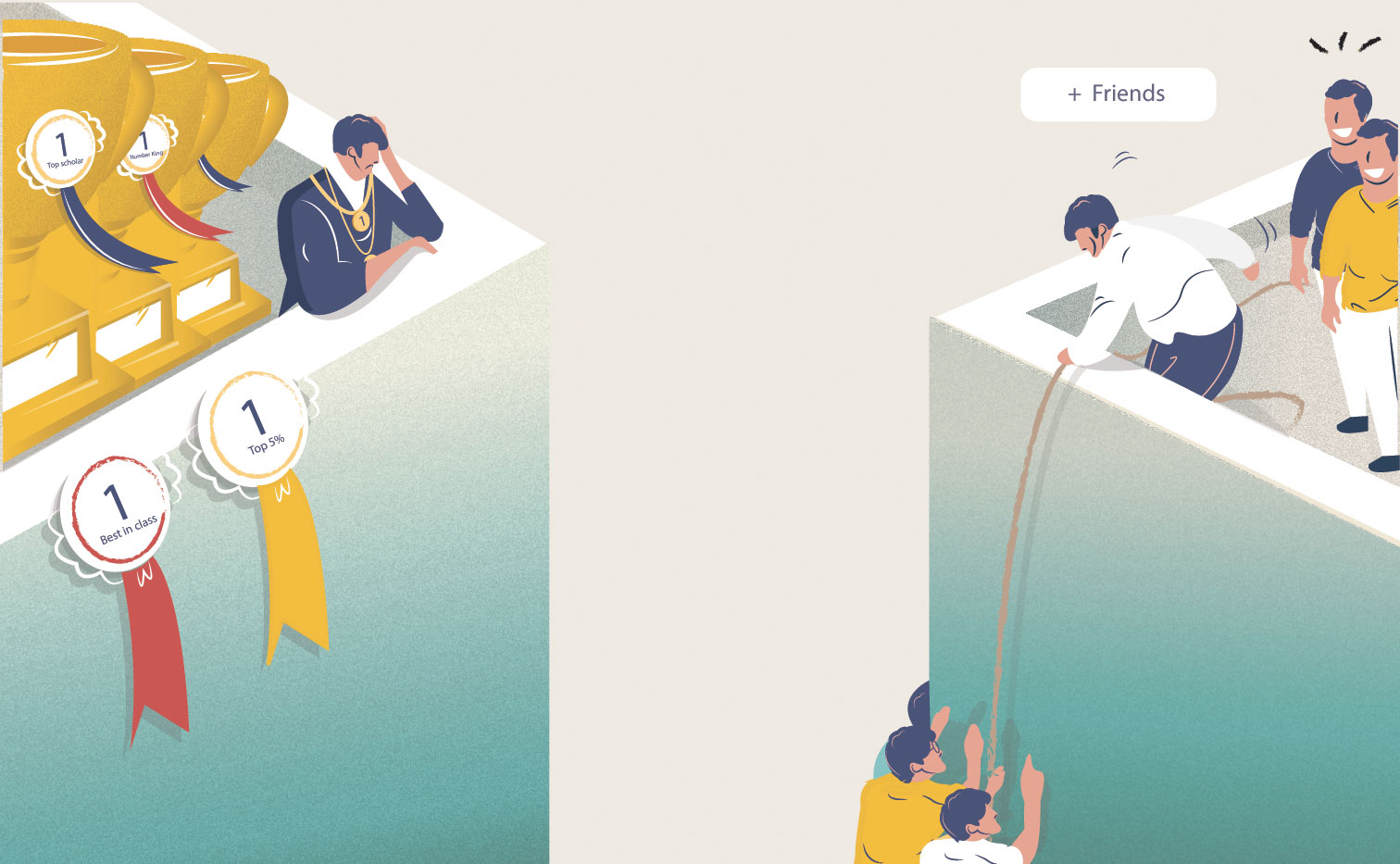
I grasped the absolute nature of winning by the tender age of six. Back then, everything was a competition. Cohort rankings, writing contests — even the friendly races my coach held at the end of every roller-blading class, when the winner was awarded with a slice of refreshing watermelon.
I learnt that competition was a zero-sum game, where the winner takes it all and the loser has to fall, as Swedish pop group ABBA famously sang.
At 12, the competition that ruled my life was the nationwide one, students vying for a place in a top-ranked school. I was told by well-meaning teachers that if someone got a single mark more, I would lose the spot.
In my anxious state, that stuck with me: with such a fine margin of error, anyone who did better was an obstacle to a brighter future. So I wouldn’t help my classmates when asked — though they knew I was top in English — because each person I didn’t help meant one less competitor to beat.
Today, I would rather have been the magnanimous classmate.
Humans are wired to be far happier collaborating than competing, wrote Survival of the Nicest author and scientist Stefan Klein. Being helpful pays off in building better social connections and resource networks over time.
Had I been willing to help, the friends I shunned could have been valuable allies.
Nevertheless, this idea of winning at all costs persists even now, when university peers refuse to share subject notes, and project groups try to outdo one another.
Once, in a case interview, I was generous with contributing ideas during the group discussion, while other candidates mostly remained silent. But the points I made were passed off as their own in subsequent presentations.
During conversations with employed friends, the single-minded desire to triumph again rears its ugly head in the relentless battle for top jobs, favourable placements and coveted promotions.
Conversely, selflessness seems foolish to champion in a society obsessed with outperforming everyone else.
Yet, in the long run, it might just promise the elusive prosperity we so desire.
Research by University of Pennsylvania psychology professor Adam Grant found that selfless people might be taken advantage of in the short term, but end up far more successful than their calculative counterparts.
Grant’s research found the most successful people to be those who enjoyed helping others as they later benefitted because of trust earned over the years.
Meanwhile, the selfish and cutthroat gradually lost social support.
Business theorist Mark Albion also proposed that the most successful leaders are those who address the needs of others.
I experienced this during a stint at a local newspaper, where one of the editors was more nurturing than the rest; he spent time guiding interns and reviewing drafts, despite competing with his colleagues to publish the most stories in the shortest time.
He was later the only one to be promoted to a very high position.
It seems, then, that the best bet for winning at life is through altruism. In the long run, a giving spirit can yield unexpected and sometimes crucial benefits.
I was one of the few individuals who was willing to work under a particular colleague during a previous internship.
He had a reputation for being given unglamorous work that was seldom appreciated. As a result, I was barely noticed by higher-ups, unlike the other interns, though I still enjoyed helping him.
Shortly after I left the company, he offered me a prestigious and well-paid writing opportunity that remains one of my proudest achievements to date. No other writer got the call.
Nearly two decades later, I’ve come to firmly reject the earliest model of winning that I was taught life taught me. Revelling in the prize is no longer satisfying; I’d rather believe in a world where, with time, nice guys (and girls) finish first.
Some days, a request might catch me off guard and the panic that someone will take advantage of my selflessness still bubbles up.
But it’s liberating to know that whether the friends and juniors I help now eventually outperform me or not, it doesn’t mean I’ve lost.
Even if they end up earning obscenely more or land a job at Google, based on past experiences, I know I’ll ultimately be winning in the end.