
Previous Story
Seeing the meaning behind art
Posted On 25 Sep 2017
Comment: Off
By Kimberly Kwek
GRAPHIC: DIANE LIM
In the past few months, my social media feed has been flooded with posts of colourful dots, flickering lights and infinity mirror rooms.
These were installations from Japanese artist Yayoi Kusama’s Life Is The Heart Of A Rainbow exhibition; a self-exploration and self-expression of her experiences with nervous disorders and hallucinations.
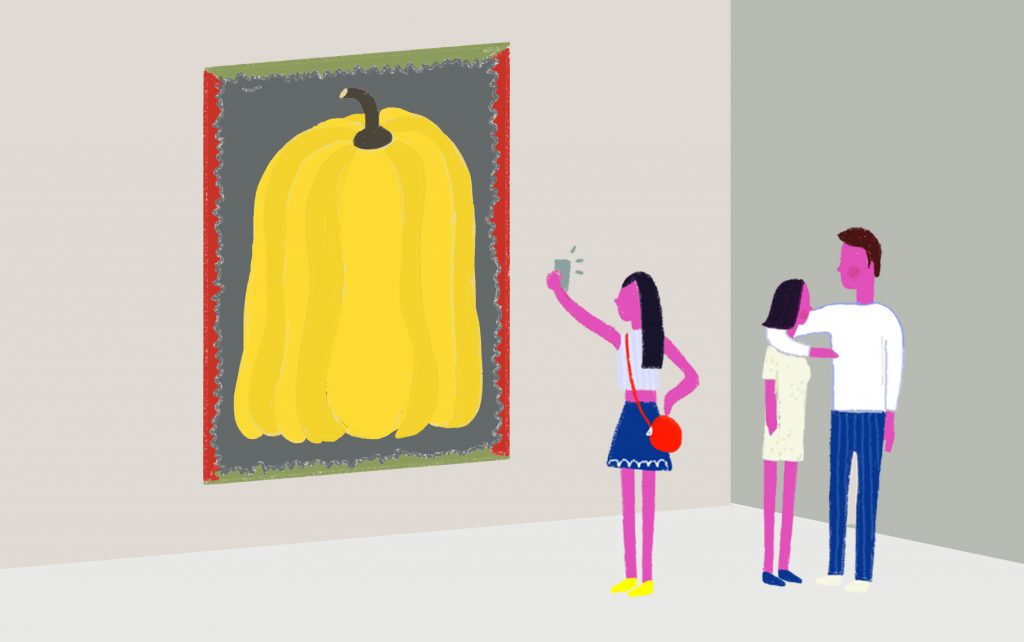
As I was talking to a friend who attended the exhibition, she lamented over how attendees were focused only on taking photos with the artworks, and were not fully appreciating the meanings behind them.
Being a huge fan of Kusama’s works, my friend had been anticipating the arrival of her exhibition in Singapore. But her experience was disrupted by other visitors who were only there to capture the right photo for their Instagram accounts.
Truth be told, there is nothing wrong with wanting to take pictures at exhibitions. In fact, Kusama personally embraces the concept of spreading art through social media.
In her opinion, social media has increased people’s understanding towards contemporary art by exposing them to it. When she first started out as an artist in her hometown Matsumoto, she did not gain recognition for her work because people did not understand contemporary art.
In recent years, however, her work has been receiving international acclaim due to her honesty in expressing her failures and fears. They have been widely discussed, especially on social media.
Interestingly, social media has created not just a heightened awareness for the arts, but has also increased people’s awareness of their own “branding” and identity online.
Through carefully curated social media posts, we are now able to control the image we leave on others. A selfie at an art gallery may allow us to be perceived as cultured and appreciative of the arts.
The danger in this is that we gloss over the real meaning behind the artwork in pursuit of that perfect Instagram selfie.
More than serving as a mere photo opportunity, the art is in fact an experience that is provocative; one that challenges and enriches our understanding of the world. If we focus only on the appearance of art, we will miss out on the stories or the messages that the artists are trying to convey. As the French artist Edgar Degas said: “Art is not what you see, but what you make others see.”
Museums in Singapore are capitalising on the potential of social media to promote art through adopting immersive and visually spectacular exhibitions.
Besides Kusama’s exhibition that ran at the National Gallery, the ArtScience museum also curated an array of high-tech interactive art pieces. An example is the Future World exhibition which is now part of the museum’s permanent collection.
To address concerns that the Singapore art scene is floundering, the government is taking steps to develop the country into an arts and cultural hub by providing grants and venues for local artists, and bringing in the works of world-renowned artists.
Since its inauguration in 2008, the Singapore Night Festival, organised by the National Heritage Board has seen an eight-fold increase in attendance, raking in more than half a million visitors in attendance in 2016.
But a rise in attendance does not necessarily mean greater appreciation for the arts. Exhibition-goers need to understand that art is more than just another post among a grid of photos. To better appreciate art for its true beauty and meaning, perhaps it is time to sign up for an art gallery workshop or a guided museum tour as well.
So the next time you go for an art exhibition, don’t just whip out your phone camera to take a photograph — stay a little longer, go for a guided tour, read the booklet, dig deeper, and admire the art in its entirety.