


Previous Story
Rising Healthcare Premiums For An Aging Population
Posted On 27 Aug 2013
Comment: 0
Government seeks to reassure citizens on new healthcare scheme but country’s aging population might pose problems for future viability of the scheme.
By Andrew Toh, Opinions Editor | Photo: PM Lee’s Facebook Page
Don’t worry. We will take care of you.
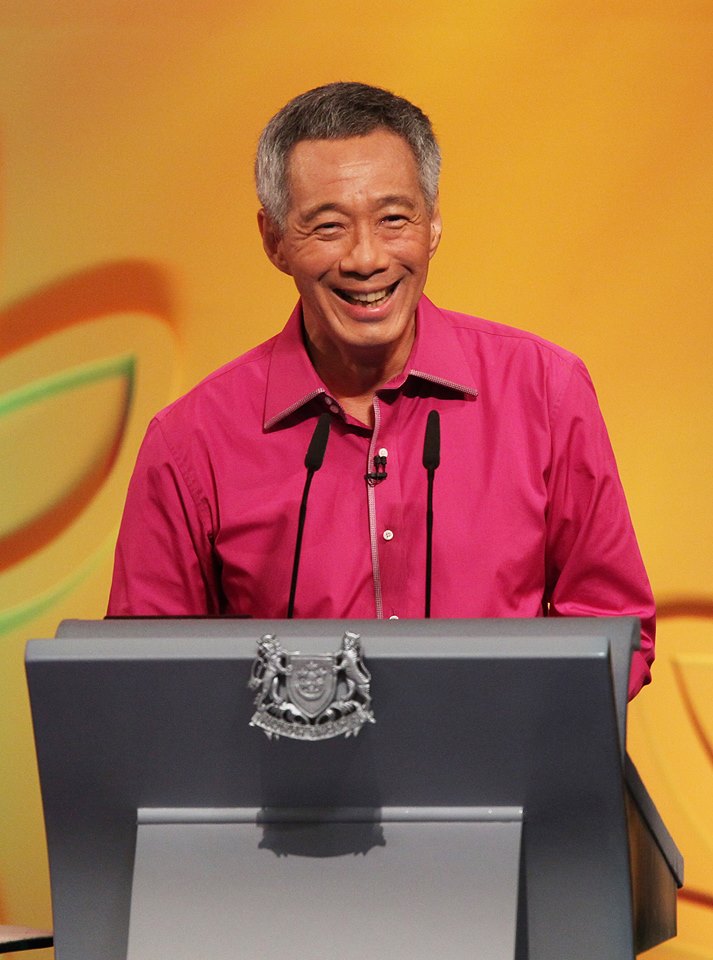
PM Lee shares his plans for the country at this year’s National Day Rally, held at ITE College Central.
That was the main assurance Prime Minister Lee Hsien Loong had for Singaporeans at the recent National Day Rally speech held on 18th August at ITE College Central.
And if repetition translates into emphasis, PM Lee sure meant it. The phrase “don’t worry” or a variation of it, was heard at least six times throughout the whole speech.
Of all the policy changes spelt out in it, the one that arguably caught the most attention would be the revamped healthcare scheme, which would mark a significant step forward in universal healthcare for Singaporeans.
Termed MediShield Life, it will be made mandatory for all Singaporeans and will insure them from cradle to grave, whereas the current MediShield coverage stops at age 90.
The creation of this scheme marks a greater era of inclusiveness – the old term “nanny state” comes to mind – as previously there was never a healthcare scheme that was mandatory and covered Singaporeans for their whole lives.
Indeed, we do not have to worry; the government is taking care of us.
Or do we?
All good things have to come at a cost. PM Lee has already forewarned that existing healthcare premiums will rise in order to support the cost of the new scheme, though he did not give any further details.
The main problem comes however when our society hits the crux of its aging population.
Healthcare costs are still affordable now as the bulk of our society is currently made up of able-bodied people who can give back to the state; more money is going into the healthcare till than is being taken out.
Figures from the Singapore Department of Statistics as of 2011 showed that for every elderly (those aged above 64) in Singapore, there were 6.3 citizens aged 20 to 64.
The department further stated that this number is forecasted to drop to 4.8 in 2015, and then further down to 2.1 in 2030.
As the average age of Singaporeans continue to rise, it is inevitable that these premiums will eventually be raised too. Gen Y-ers will then have to contribute a greater portion of their salaries to cover these increments.
That is unless the government is prepared to cover these additional costs through more subsidies through state coffers.
Currently, private sector employees under 36 with a monthly income of at least $1,500 take a reduction of 20 per cent of their salary for their monthly CPF contribution. Public sector employees – which includes statutory boards and ministries – from the same age group take a reduction of 15 per cent.
A slight increase in healthcare premium might not rile up most Singaporeans. But if it keeps on increasing, there will come a point when Singaporeans start to grumble.
Essentially, what the government needs to do is to keep a close eye on the ground to ensure that healthcare remains affordable to all Singaporeans.
Should premiums keep rising, the government may risk the possibility of driving away valuable local talents who might choose to migrate abroad where healthcare contributions are not as high such as Britain where current healthcare costs are in the 18 – 20 per cent range.
It is a tough balancing act and the government needs to listen to the concerns of its people if it wants to show that it really cares.


