


Previous Story
Movie Review: Divergent
Posted On 29 Mar 2014
Comment: Off
Joining the ranks of teenage action-blockbusters is Divergent, adapted from the dystopian novel of the same name. But how does it fare next to recent teen-flick, The Hunger Games? Reviews Writer Saranya Mahendran finds out.
By Saranya Mahendran
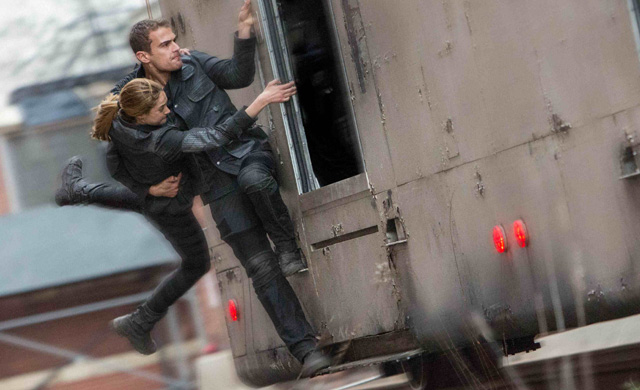
PHOTO: SUMMIT ENTERTAINMENT
Divergent
Action, Romance, Science Fiction [PG13]
Ashley Judd, Aaron Eckhart, Kate Winslet
139 minutes
Much like The Hunger Games, Divergent is set in a futuristic dystopian country with rigid social divisions. The settings of both stories run parallel: electric fences surrounding cities, with greenery far beyond it. Behind these fences, too, are societies lacking the freedom to do as they please.
Characters in Divergent dress in predetermined colours according to their factions – even their career choices and character attributes boil down to the factions they were born in.
There is Abnegation, the altruistic and welfare-oriented people who make up the government; Candor, the honest people who make up the legal system, Erudite, the brains who devote their time to research and development; Amity, the peaceful and free-loving people who produce the agriculture for the city; and Dauntless, the brave and reckless soldiers of the military system.
Beatrice Prior (Shailene Woodley from The Descendants and The Secret Life of the American Teenage) is a quiet Abnegation girl who has always felt suffocated by her faction, which requires her to be selfless all the time. She grows up yearning for the lifestyle of the Dauntless, the society’s military faction, who pride themselves in acts of bravery such as parkour and tournament fights.
Like in the classic underdog story, Beatrice’s coming-of-age tale comes after she takes an aptitude test and discovers that she is divergent. This is the turning point in her life, where she finds out that she has an equal aptitude for three factions: Abnegation, Erudite, and Dauntless.
Most viewers would believe that this is a cause for celebration, but Beatrice is harshly warned not to tell anyone about her test results, as doing so would endanger her life. Armed with what little information she has about being divergent, she decides to change her destiny by choosing the path of the Dauntless.
Adapted from a novel of the same name, Divergent falls short in quite a few places. In the beginning of the movie, the audience is treated to thrilling visuals of Beatrice jumping off buildings and zip-lining through the city, among other blood pumping activities. However, the momentum gets lost quickly as the audience is soon subjected to excessive montages of her training phases.
A lot of this precious screen time could have instead been dedicated to fleshing out rivalries among the characters from the novel. In the novel, Beatrice is constantly taunted and nearly killed by some of the Dauntless-born initiates. Omitting these rivals in the movie could be likened to removing Draco Malfoy from the Harry Potter movies — it amputated part of the original narrative.
Director Neil Burger’s handling of Divergent cost some of its appeal. While there are several tear jerking scenes that tug at the hearts of the audience, they end too quickly, leaving viewers reeling and stumbling towards the next scene. If the movie had been more patient in establishing these scenes, it would have gotten the audience more emotionally invested like the novel did for its fans.
While some may find the romantic scenes between Four (Theo James from Bedlam and Golden Boy) and Beatrice predictable and cheesy, the couple brings a light-hearted aspect to the film. Burger also manages to mesh the romantic and action scenes together seamlessly — in the film’s moments of impending danger, it was comforting to see Beatrice seek solace in Four.
Divergent isn’t all that bad, but it could have been so much more. The premises, characters, and action-filled story are great, but the gaping plot jumps and awkward pacing were unsettling. It is up to the sequel, Insurgent, to pick up where Divergent left off and breathe cinematic life into the popular teen novel.