


Previous Story
Running Precautions
Posted On 02 May 2014
Comment: Off
Running has been a favourite pastime among many of us to keep fit and burn some calories along the way. But how many of us know how to prepare our bodies for the workout, and minimise the risks of injury? Sports Writer Tessa Cho finds out from sports trainer Lynne Teo, 53, on how to keep injuries at bay.
By Tessa Cho
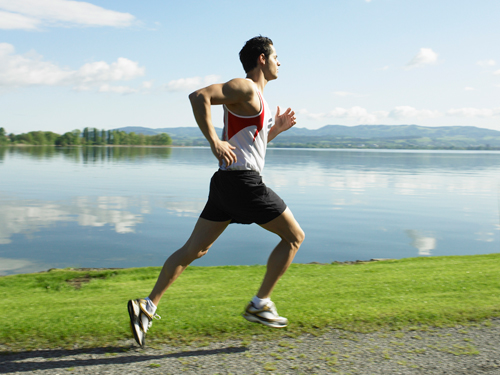
PHOTO: MEN’S HEALTH UK
Pre-run rituals
Warming up our muscles before a strenuous run may be a piece of well-known advice but it is often neglected.
Begin your workout at a lower intensity to give the muscles time to prepare for the run. A simple stretching exercise for calf muscles involves placing the base of your feet against a wall, one at a time, and pushing against it such that you can feel the muscles pull slightly. Stretching is also a good way to improve flexibility, which increases one’s range of motion during a run.
“Stretched and warmed-up muscles prevent strains and sprains from occurring during exercise,” said Ms Teo.
Lacing up with the right footwear that suits your sole-needs is another important factor to note before running. Runners with flat feet may have the tendency to thump on the ground and over-pronate, such that added stress is channelled towards the inner side of the foot, past the point of shock absorption. This places excess strain on the ankles and limbs during a run. On the other hand, runners with high-arched feet tend to put more weight on the outer edges of their feet. Such running techniques may not allow proper shock absorption and they carry a high risk of injury. In such cases, Ms Teo recommends running shoes with good base support, as opposed to soft-soled ones.
Examples of running shoes with good base support include the ASICS GT-2000 and Gel-Kayano series.
Post-run follow-up
Following up a run with proper hydration is also beneficial. Isotonic drinks that contain electrolytes are a viable choice to replenish the salts lost during your run. Such drinks include H-TWO-O, Pocari Sweat and Aquarius, among many others in the market. However, Ms Teo warns against over-consumption of highly-caffeinated and sweetened energy drinks.
“While the high caffeine and sugar content in some drinks may give a sudden, temporary burst of energy, this is often followed by a ‘crash’”, cautioned Ms Teo. A ‘crash’ occurs when runners or athletes feel suddenly exhausted and burned-out.
After an exhausting run, the body should also be given recovery time for it to adapt to the demands of a workout. Recovery sessions need not mean complete rest. Lower-intensity activities may be adopted to allow time for the body to recover. Ms Teo suggests cross-training, which is the engagement in a physical activity or sport that works on a different set of muscles, as a recovery strategy. For example, runners may switch to swimming or playing of racquet sports to change the dynamics of the workout.
“Cross-training lets the body work on a set of muscles that are different from those used in your primary sport. In doing so, the muscles that running doesn’t utilise are strengthened, preventing muscle imbalance,” said Ms Teo.
With these tips in mind, you can now run the extra mile without running yourself down from aches and pains.


