


Previous Story
The F-Word
Posted On 08 Oct 2014
Comment: Off
By Lo Yi Min
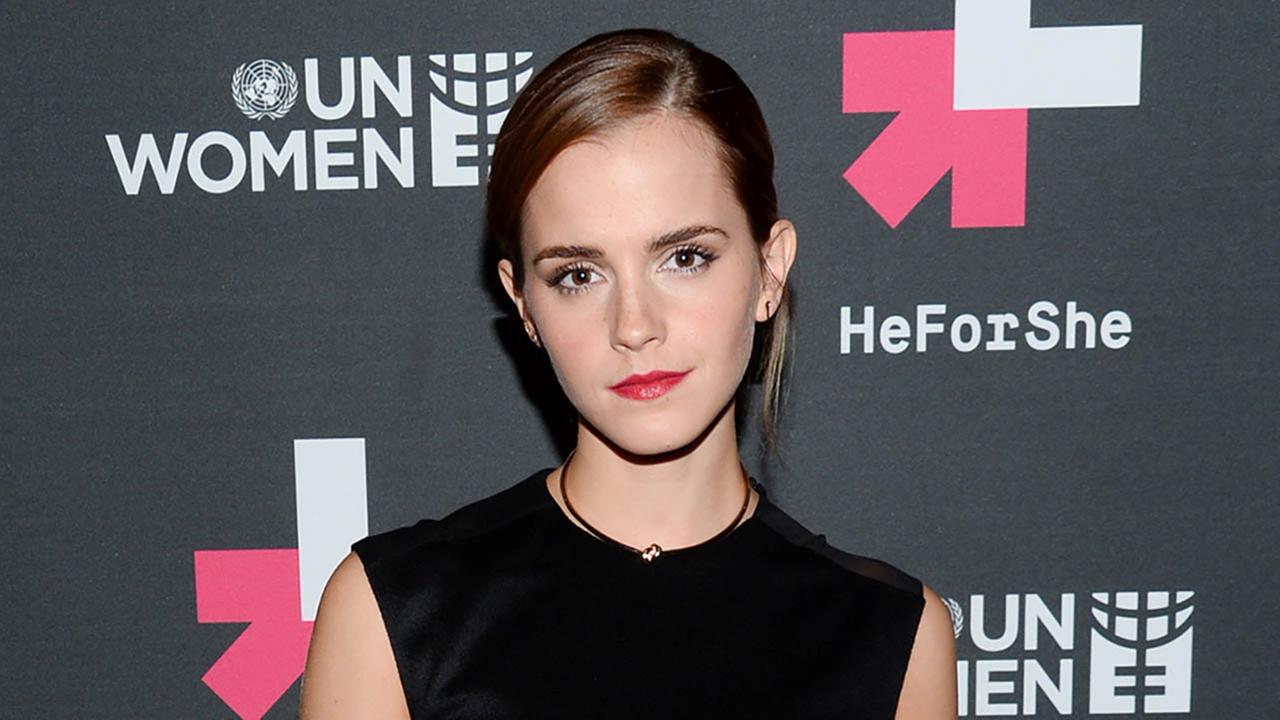
IT’S UNCOMPLICATED: Recently appointed Women’s Goodwill Ambassador for the United Nations, Emma Watson proudly declared herself a feminist – a straightforward conclusion for her. PHOTO: INTERNET
We need to talk about dropping the F-word ––- feminism, that is.
Feminism, according to the New Oxford American Dictionary, is “the advocacy of women’s rights on the grounds of political, social and economic equality to men”.
Simply put, it refers to a movement that advocates sex and gender equality. It identifies women as a group oppressed by male-dominated systems of power and seeks to establish their political, economic and social rights.
In a sense, feminism can be seen as a fight for the day when feminists no longer have to identify themselves with such a label.
Yet whenever feminism, or being a feminist, is mentioned, many figures in the media have been quick to shun their association with the term. This is because a simplistic view of being a feminist implies that one hates men and wants to give women all the power in the world.
Meanwhile, those who identify themselves as feminists are often frustrated by sex and gender discrimination, and it’s easy to get ruffled when the views they voice are dismissed or unacknowledged.
Early this year, the Women Against Feminism (#WomenAgainstFeminism) movement emerged. Participants used social media platforms to explain why they “don’t need feminism”.
Reasons such as “because I love men” and “I believe in equality and not … supremacy”, published on the #WomenAgainstFeminism Tumblr site, showed how feminism has been unable to shed its image of promoting misandry and matriarchy.
These views remain despite repeated clarifications from prominent feminists, such as Amy Poehler, Ellen Page, and Facebook chief executive Sheryl Sandberg, that feminism is about gender equality.
When a movement is undermined by a blatant misunderstanding of its purpose, it breeds frustration. If a woman who identifies herself as a feminist speaks a little louder in the hopes of getting heard, or expresses her agitation at being misunderstood, she is, as #WomenAgainstFeminism has shown, often perceived as an angry man-hater. It is misinformation that feeds the distortion of the Feminist movement.
Pro-feminism
Despite anti-feminist sentiments, there are men and women who are in support of feminism.
In contrast to #WomenAgainstFeminism, Beyoncé declared herself as identifying with feminism in her single ***Flawless, which contains sample excerpts from Nigerian writer Chimamanda Ngozi Adichie’s TEDx talk, We Should All Be Feminists.
More recently, actress Emma Watson announced: “I am a feminist and this seemed uncomplicated to me.” She was giving a speech at the United Nations (UN) to launch the campaign HeForShe, calling for men to stand against all forms of discrimination faced by women and girls.
Known for her portrayal of Hermione Granger in the Harry Potter films, Watson highlighted the negative connotations surrounding the label and then sought to focus on feminism’s aim of bringing about sex and gender equality.
The recently appointed Women’s Goodwill Ambassador for the UN admitted that the HeForShe campaign struggles for a “uniting word”. But what should matter is a person’s belief in ending sex and gender inequality ––- regardless of whether they identify themselves as feminist or not.
Casting for solidarity
It is in this spirit of seeking solidarity through shared beliefs that HeForShe specifically aims to include men in feminism.
The campaign’s strategy, however, may be problematic. In its bid to appear inclusive, the movement that the UN is pushing runs the risk of marginalising the very group it is trying to help.
HeForShe’s official website displays a map that reports the number of men in each country who have pledged their support. The numbers for women, in stark contrast, are missing. In fact, only men are called upon to show their support. To join this solidarity movement, you would need to declare that you are “a man who is going to stand up for women’s rights”.
While it is important to call on men to support feminism, leaving women out of the campaign works against the very idea of gaining solidarity. For a campaign that seeks sex and gender equality, how is it that women ––- the supposed equals to men ––- do not have their voices represented?
The invisibility of women here is even more troubling when coupled with Watson’s point on how men suffer from gender inequality too.
Gender roles and expectations placed on men can be damaging. Common stereotypes mostly call for them to act in certain ways. They are expected to not cry or be afraid, to like sports, and to be less inclined towards the domestic sphere.
For instance, young boys are often told not to cry like a girl, as if the open display of emotions is something men should be ashamed of.
I have a close male friend who doesn’t care for football, and who loves to cook and sew. He has been called “girly” and made to feel that his interests are wrong as they deviate from what society perceives as the ‘typical male’. His experience is one example of how not conforming to gender expectations would invite questioning of one’s identity as a male by society.
But to highlight this, and then invite men to support the HeForShe campaign, is almost suggesting that they should care only because they, too, are negatively affected by sex and gender inequality.
This invitation also implies that feminists have previously neglected the fact that men also suffer in terms of gender discrimination.
But the idea that gender inequality harms men is not new to the table; most feminists do not see feminism as a movement that only women should fight for. Influential feminist author bell hooks asserts in her book, Feminist Theory: From Margin to Center, that men, too, should be involved in ending sex and gender oppression.
Writers Lauren Rankin and Katelyn Hilsenbeck are among feminists who agree with this stance. Unfortunately, because of the negative image that feminism has garnered, the views that men can suffer under gender inequality, and that they, too, can support feminism, are not always heard.
Gender equality vs. feminism
Has the campaign been effective thus far? For starters, over 170,000 men have committed to the movement on HeForShe’s website.
It has shown that there is a significant number of men who do believe in gender equality. However, many who have voiced their support used the terms “gender equality” and “freedom” rather than “feminism” or “feminist”.
But in shifting the focus onto men and positioning itself as inclusive, HeForShe inadvertently questions if there is a space for feminism in the “gender equality movement”. It appears to want to discard a term that has been accused of centring on one gender.
In the essay adapted from her TEDx talk, Adichie argues that to deny the word “feminism” is to be dishonest. While the HeForShe movement is about gender equality, this broader term may fail to acknowledge the magnitude of inequalities faced by women.
Perhaps discomfort with “feminism” as a term stems from how it may seem to privilege females. As a label, feminism makes us think about the fact that raising one gender over others, even if only in terms of language (think words like ‘mankind’), breeds inequality. Critics ask: How can feminism claim to seek equality for all genders when the word represents only one gender?
Yet the word “feminism” can also be a double-edged sword. It may perform the very injustice it is trying to end, as it gives the impression that it excludes not only males, but also those who identify as Lesbian, Gay, Transexual and Bisexual (LGBT).
Looking beyond a label
I am a feminist and to me, it is complicated. To me, a feminist is someone who champions equal rights and opportunities, regardless of sex and gender. When I see myself as one, I believe in and support a movement that fights for the day in which this identity is no longer needed. I do not want to hold on to this identity all my life.
To this end, there are tangible ways to affect changes on an individual level.
To learn more about feminism and gender equality, there are online resources that promote a more well-rounded understanding of the movement. No Turning Back traces the historical emergence of feminism through the seminal texts it lists, while local organisation Association of Women for Action and Research (AWARE) publishes many articles, one of which is a good introduction to the facts and myths of feminism. For instance, a popular myth about feminism is the belief that women who are feminine and demure cannot be real feminists.
AWARE explains that a person’s love for high heels does not make her less of a feminist. The UN Children’s Fund and the UN Population Funds provide good resources as well.
Supporting the feminist movement also means sharing one’s knowledge on sex and gender inequalities, and thinking about how to reduce these inequalities in day-to-day life. Personally, I should help those around me, regardless of sex and gender, understand the need to support gender equality.
For example, I will choose to stand up for people who are made fun of because they don’t fit sex and gender expectations in society. If I encounter someone who uses language that is derogatory towards one gender, I will try to let the speaker know why I think that his or her choice of words may be part of behaviour that perpetuates gender inequality.
To me, supporting feminism means being more careful of our use of language and questioning the way we see others through their sex and gender. And this seems more effective than merely picking on a label that lends ambivalent effects to the cause of achieving gender equality.


