


Previous Story
The Art Of Getting Crafty
Posted On 12 Aug 2015
Comment: Off
Do-It-Yourself workshops are all the rage these days — the masses seem to have taken a liking to creating personalised products from scratch. Lifestyle Editors Chelsea Tang and Fabian Loo attend some of these workshops to find out the appeal behind getting your hands dirty.
By Chelsea Tang and Fabian Loo
PHOTOS: LIM ZI SONG
Je’taime – Perfume Making
http://www.jetaime-singapore.com
Did you know that our personalities affect what scents we prefer?
That is why different people prefer certain aromas over others. Creatives prefer floral scents, while sporty individuals lean towards fragrances with citrus tones, said founder of homegrown DIY perfume label Je’taime Mrs Prachi Saini Harg, 41.
PHOTOS: LIM ZI SONG
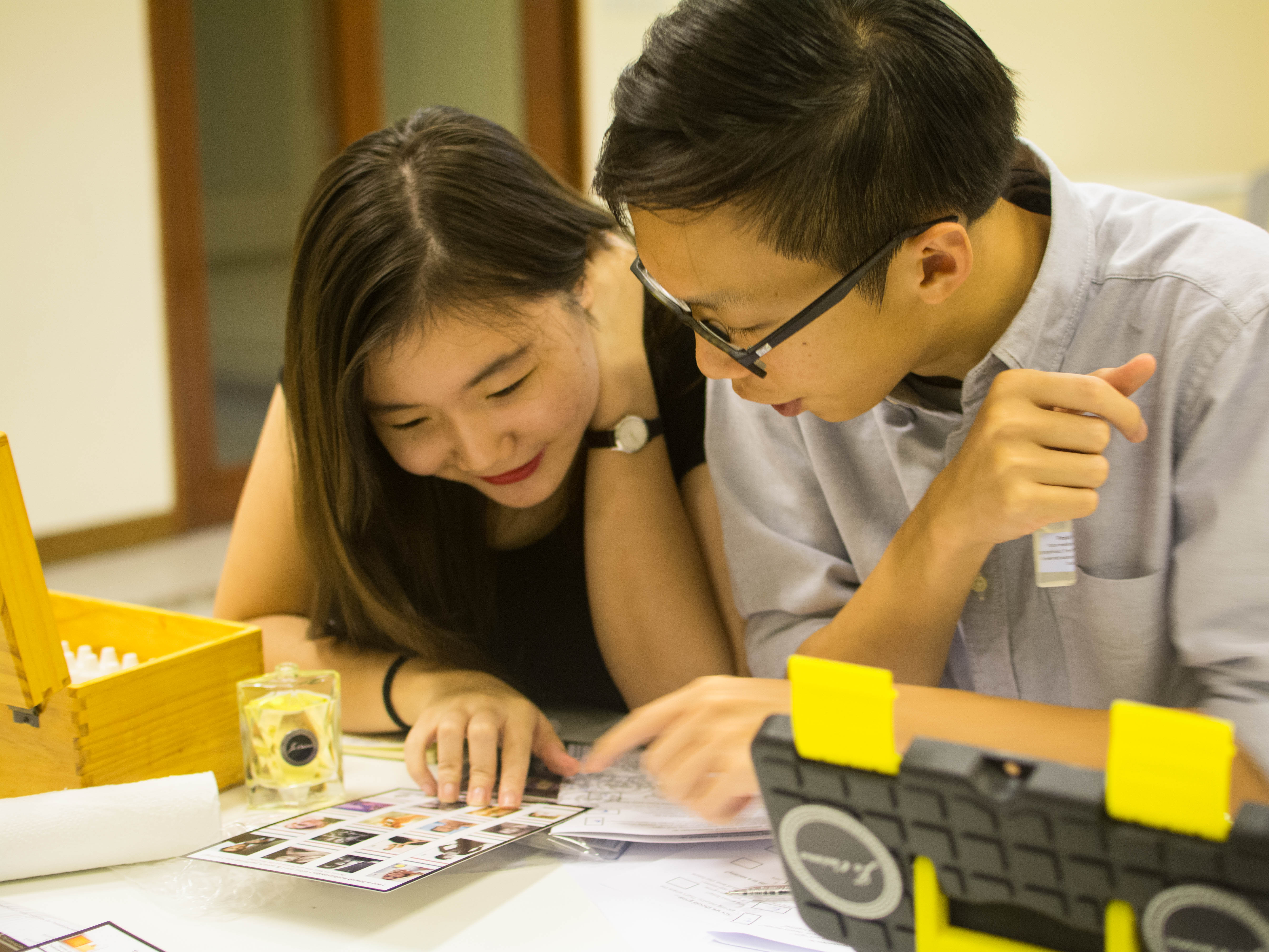
Hoping to create the perfect fragrance that best fits our characters and personalities, we attended the basic perfume making workshop conducted by Mrs Prachi. To better pinpoint our predilections, Mrs Prachi had us undergo a perfume personality quiz. From there, we were able to find out which type of tones best suit our style and character — be it citrus, fresh, floral, woody or oriental.
While both of us have always loved citrusy fragrances, our quiz results revealed that we have vastly different scent profiles from what we like, which meant we were instead more suited to floral and fresh fragrances based on our personalities,
We were then introduced to separate perfume boxes with the standard variation of scents for both genders. The box for females featured bottles with different feminine notes of flora and fauna, while the men were dealt with more masculine musky and woody tones.
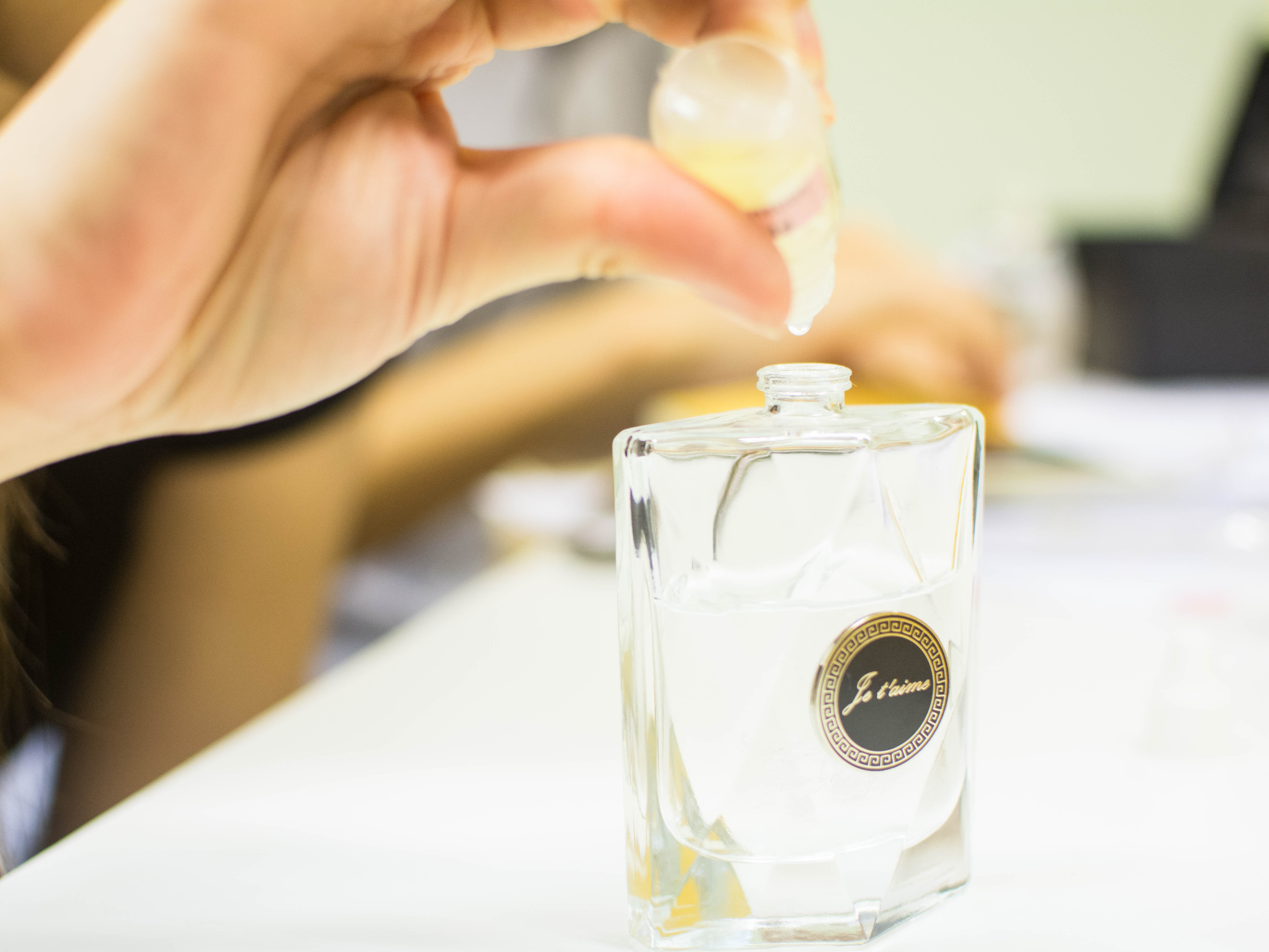
The perfume concocting process was simple but tedious. For a typical 75ml perfume, we had to drip 500 drops of various fragrant concentrates in scentless alcohol. If you’re wondering, yes, we had to count every single drop! We even had to drip scents from all perfume categories — it left us rather apprehensive as it seemed like we were brewing up a mishmash of potentially mismatching scents.
The process of dripping of various concentrates may put people off initially, but it is the standard procedure in perfume making. Mrs Prachi even guaranteed us that we would adore the end product.
“A single rose smells good by itself, but a bouquet of different flowers is bound to smell better,” she quipped.
True to her words and much to our astonishment, after a two-hour long process where we were subject to at least twenty different fragrances, we both ended up with scents that not only impressed us, but will also be used as an everyday perfume.
The perfume making workshop made for a novel experience, allowing us to learn a lot more about the art and benefits of handmade perfume as compared to their store-bought, commercialised counterparts. Also, we gained a greater understanding of our own scent profile and the fragrances that best suit our personalities.
PHOTOS: LIM ZI SONG
The Maketh Project – Leather Crafting
751 North Bridge Road #02-02
Leather crafting brings literal meaning to the term arts and crafts. From using our creativity, to make clean and precise cuts, to assembling the final product, our two-hour-long session worked us out both mentally and physically.
As we were absolute greenhorns, our instructor recommended a beginner’s craft that involves only the most basic skills of leather crafting. The task might sound deceptively simple, but the entire process of creating a humble cardholder was a tedious 12-step procedure.
We first had to create our own templates and trace it on a chosen piece of leather, then slice it meticulously with a penknife to ensure a clean and straight cut.
We also had to dye the edges of the leather using a special leather paint to give it a more polished and finished look. Our hands were soon trembling from the pressure of attaining a clean finish, as we had to be extra careful with the dye, which stains the leather permanently. We were told us that ladies typically do better in this step than men.
PHOTOS: LIM ZI SONG
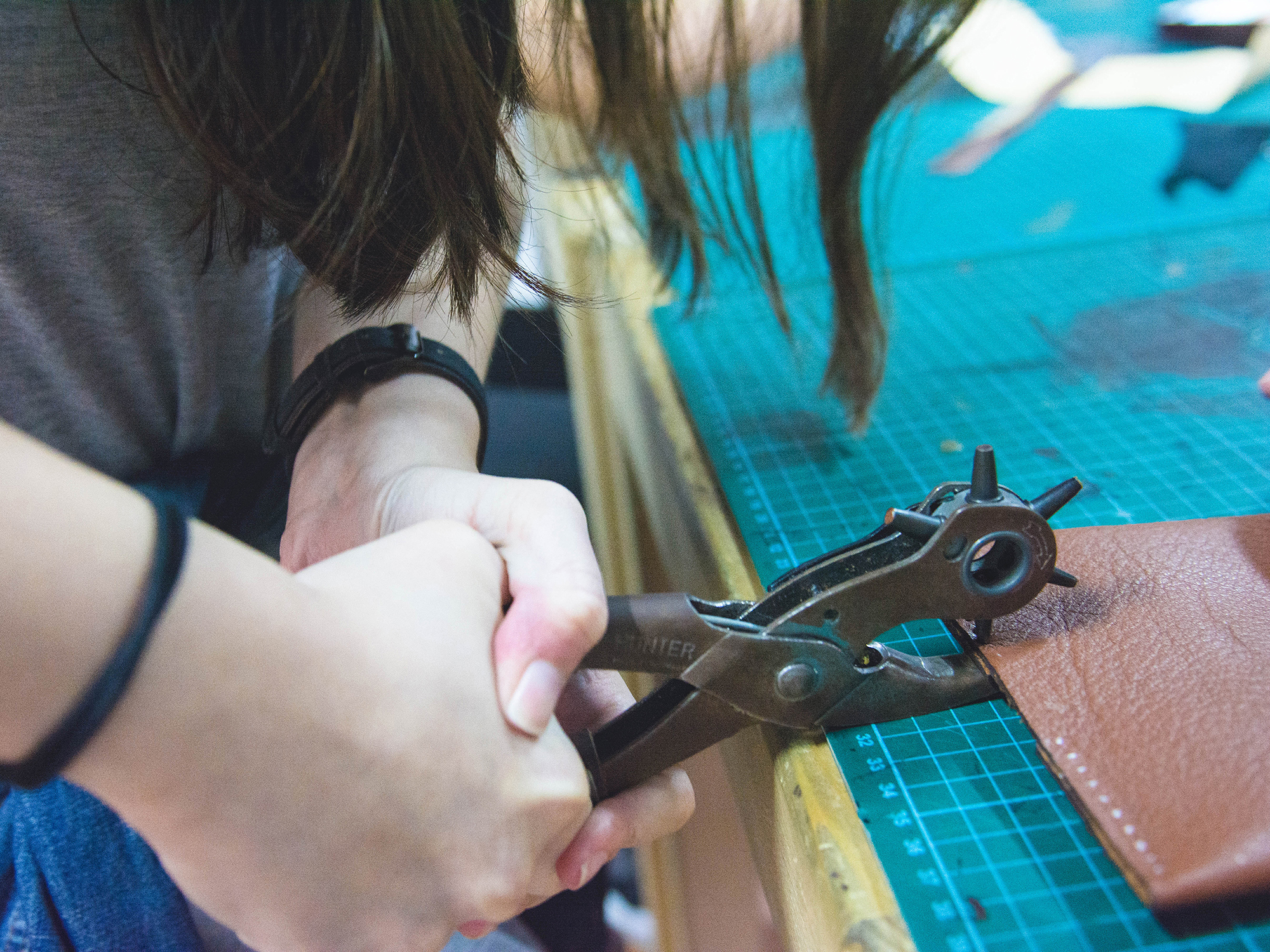
The next step was to apply glue and puncture holes along the edges to sew the leather shut. A bit of elbow grease was required to punch the holes in a straight line and achieve a straight seam. Lastly, we got to choose a thread, and the final step was to stitch the ends shut.
Despite the tediousness of the workshop, we found ourselves enjoying it thanks to the intimate one-on-one guidance from the instructors and the rustic aesthetic that leather crafting has. One can also virtually create anything — simply bring along an image of your desired product, and the instructors will advise on the feasibility and price of the project. And do not worry if you are not able to complete the tasks perfectly. We found that our blunders and misalignments added a certain personal touch to a handmade product.
We left the workshop with personalised cardholders, and a sense of pride knowing we created items that can last the weather.
PHOTOS: LIM ZI SONG
The Soap Ministry – Soap Making
Liang Court #02-33A
We always had the misconception that soap making was very much like candle making — and we couldn’t be more wrong. Soap creation goes beyond just melting and pouring melted soap into moulds.
When we stepped into the store and saw the variety of different essential oils, moulds and fragrances, we knew we were in trouble. Soap making is definitely not for the fickle-minded.
For a start, participants are allowed to choose from different soap bases that are suited for a variety of skin types. Choices include organic goat’s milk that’s for all skin types, premium Baobab (an African fruit) and Centella Asiatica (herbaceous plant) for healing and firming.
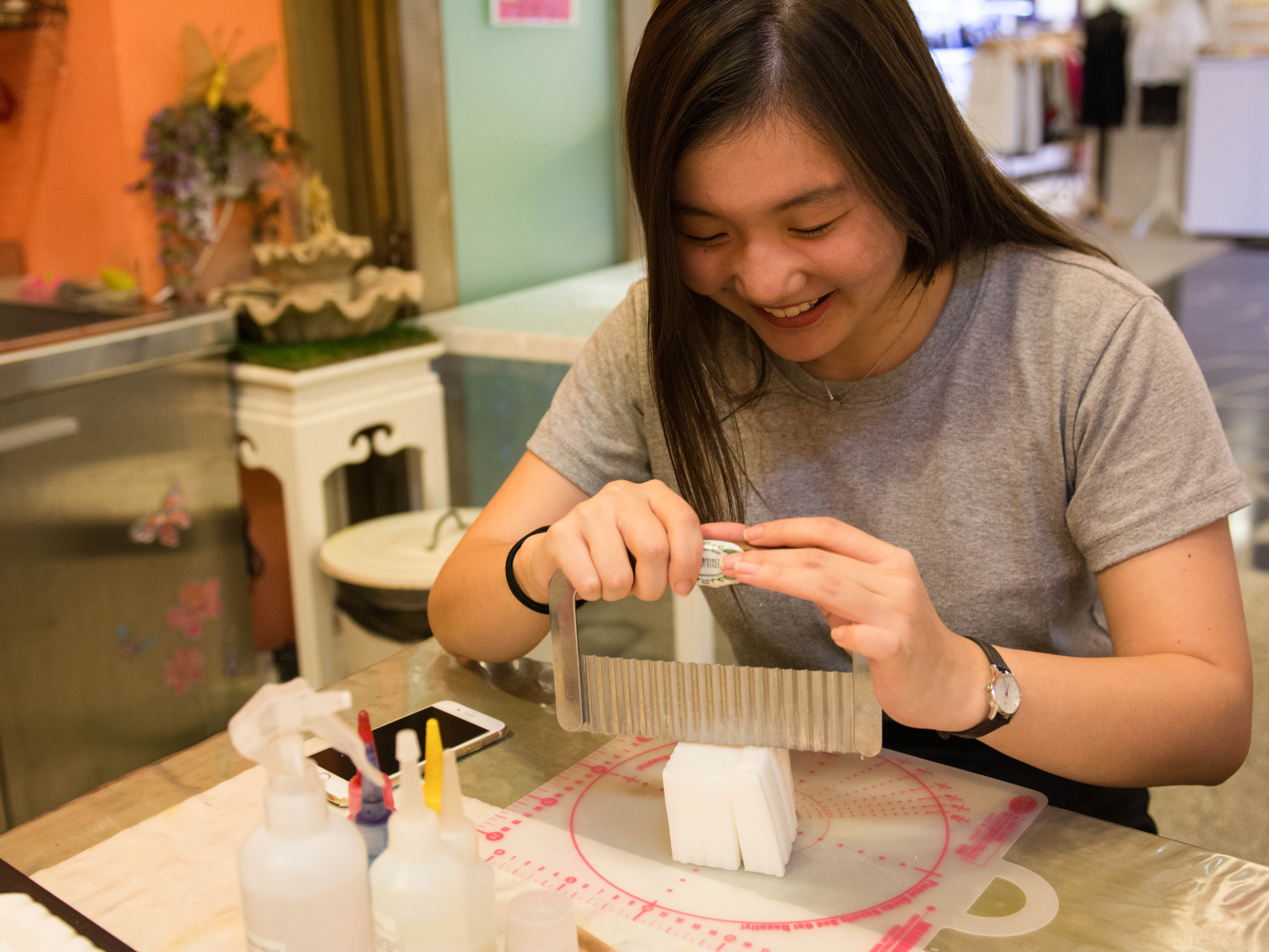
The first step was to chop up the soap base and double boil the pieces to melt them. Food grade colouring can be added to intensify the colours, but we refused the addition of to add artificial food colouring as it went against the purpose of creating natural soap.
Then, we had to decide between the different herbs and essential oils for our soaps. With an extensive list of choices — each with its own unique medicinal and beauty properties — finding the perfect balance was hard. Popular choices include tea tree for its astringent properties, lavender for its relaxing and soothing scent, and lemon for its refreshing quality.
Given the daily stress from work and assignments, we opted for lavender to calm any tense nerves and the revitalising lemon to get through the day.
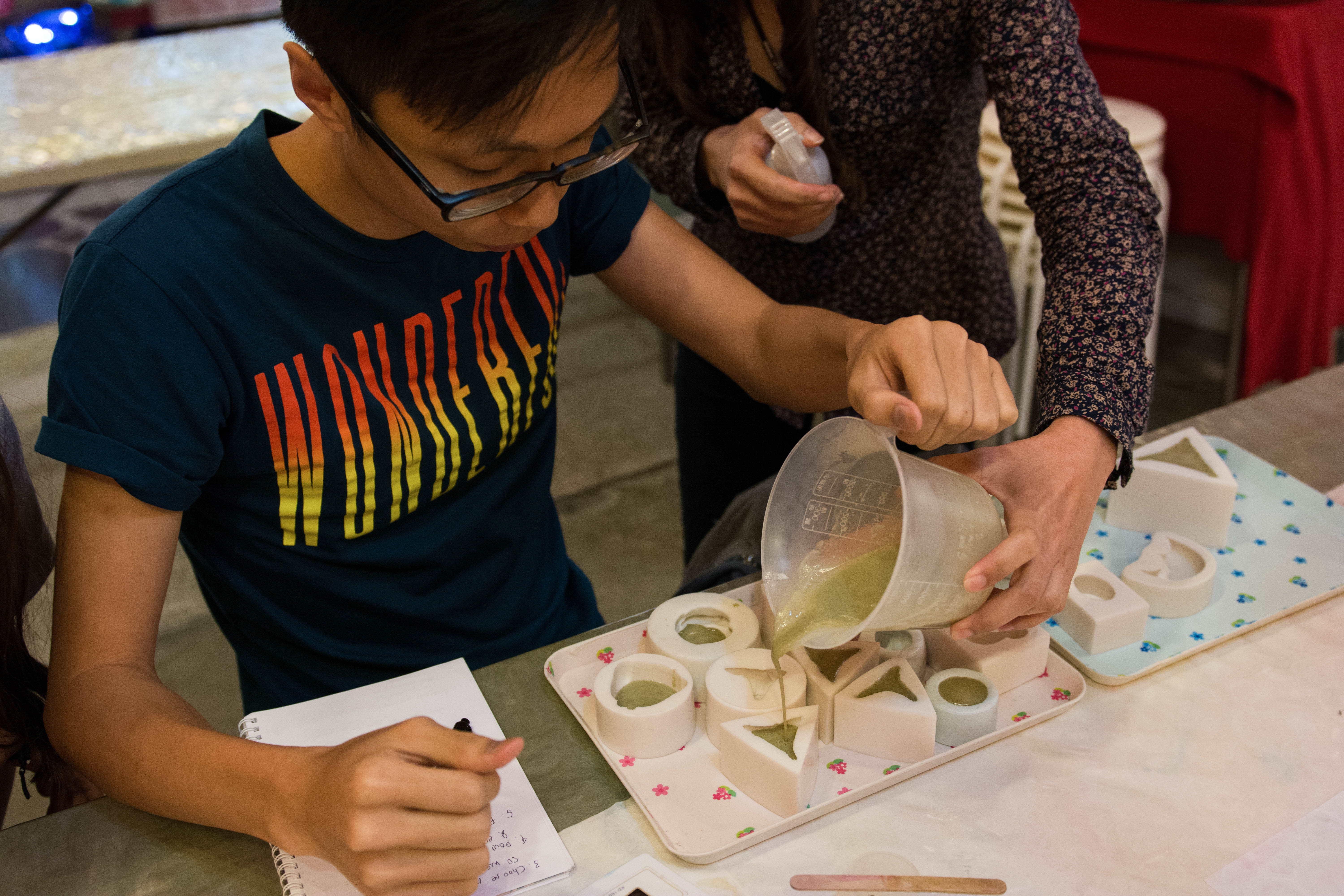
After adding our all-natural herbs and fragrances into the melted soap base, we quickly poured the runny mixture into the moulds. One can pick from moulds of all shapes and sizes, from classic soap bars to unconventional ones like the bazhang (traditional rice dumpling) mould.
PHOTOS: LIM ZI SONG
Similar to making ice cubes, the moulds were placed in the freezer to speed up the hardening process. We managed to create at least ten pieces of soap bars each.
While some might prefer the conventional soap bars to the irregularly-shaped ones, we found the novelty of creating your very own organic and natural soap an enriching experience. What the soap bars from The Soap Ministry lack in practicality, they more than make up for with their customisability. Trust us when we say they make for some unique gifts for friends and family – our friends squealed in delight when they received our crafted soap bars. But above all, you get to craft the soap to suit your skin type and eliminate artificial chemicals.
A word of advice though: those who cannot make firm decisions like us should be prepared to spend much longer at the workshop.


