
Previous Story
Children with ADHD are diamonds in the rough
Posted On 25 Sep 2017
Comment: Off
By Xu Qi Yang
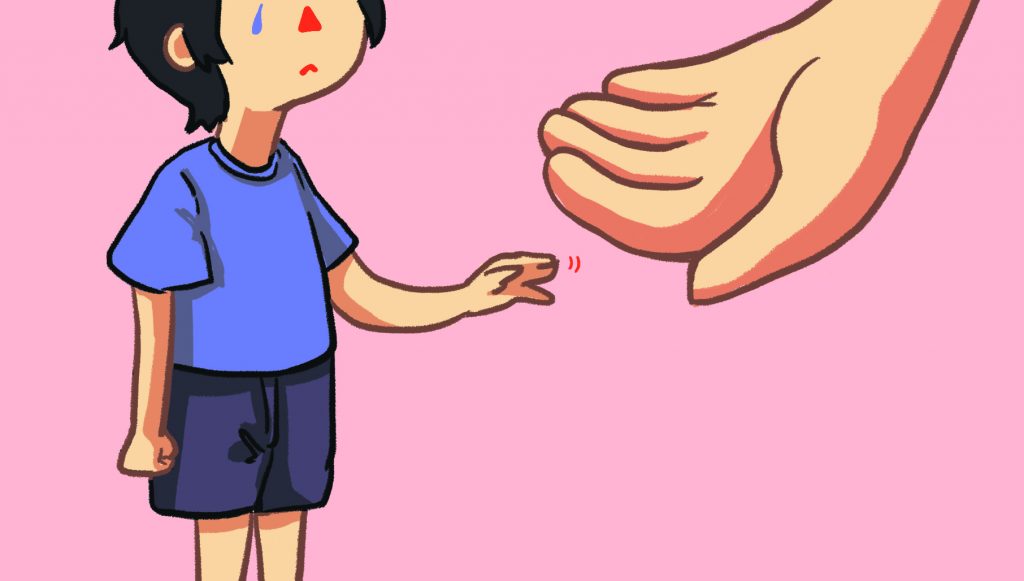
GRAPHIC: AMY ONG
The child cowered behind the table, shouting: “No, I don’t want to have tuition”, over and over. He then became angry and agitated, tearing up his homework into pieces while hitting his mother as she tried to control him.
That was the first encounter with my former tutee, a then seven-year-old boy. His mother later explained to me that he has been diagnosed with Attention Deficit Hyperactivity Disorder (ADHD).
Because of this condition, he, unlike most primary one students, faced difficulties in regulating his emotions and reading simple words like “red” or “cat”. He was also hyperactive, clearly reflected in his inability to sit still throughout the duration of his examination. As a result, he failed every test in school.
Even over trivial matters, he risked turning violent and throwing his chair against the wall.
Though I had no prior experience as a tuition teacher with students who had learning disabilities, I was assigned to him by a tuition agency, and was not informed of his condition.
Through teaching him for a year, I became more aware of the need to provide children with ADHD the emotional and academic help they require.
My tutee had an extremely low self-esteem due to his academic struggles. To get him to learn, I found that it was important to tell him he still did well even when he encountered failures, because he tried. When he did well, I would lavish praise on him or get him small gifts to reward him. Because he was a slow learner, it was crucial to spend more time to reiterate important learning points.
In an interview with the Straits Times in 2016, the President of the Disabled People’s Association (DPA) Nicholas Aw said that not all teachers in mainstream schools may be adept at recognising ADHD in children due to the less visible signs of disability.
An ADHD student fidgeting with staplers in class is one example. When situations like these occur, the child is punished and made to stay back in class during recess, Mr Aw added.
I agree with Mr Aw — ADHD is often a misunderstood disability as these children are mostly governed by their uncontrollable impulses and unregulated emotions.
Without a doubt, steps have been taken to support these children. The Developmental Support Programme (DSP) is an initiative introduced by the Ministry of Social and Family Development.
DSP seeks to support children with learning disabilities by fostering their communication and motor skills through on-site intervention in mainstream childcare centres and kindergartens with the help of therapists, psychologists and facilitators.
Additionally, every mainstream primary school has an attached Allied Educator. These educators provide support for children with special needs to help them integrate more seamlessly into their schools.
While I am heartened to see these initiatives, we should, as fellow Singaporeans, individually contribute to these integration and inclusivity efforts.
For a start, when we notice children launching into an outburst in public areas, maybe we should stop staring and judging them for their actions. Instead, we should be tolerant, and understand they do not mean any harm nor intend to cause any disturbance. They just need time to learn to regulate their behaviours.
But if we choose to adopt a close-minded mentality where we are unable to empathise with children with ADHD, our selfishness might cause them to retreat further into their shells, and make them even more reluctant to partake in social activities. This might limit their opportunities for growth.
Moreover, the World Health Organisation believes that an inclusive environment is crucial for “nurturing the growth, learning and development of children,” especially those with learning disabilities, as mentioned in a 2012 discussion report.
Empathy does not come naturally, but it can be nurtured in us through volunteerism. Social support organisations provide platforms for volunteers to interact with children diagnosed with ADHD, allowing both parties to learn from one another. Particularly for the volunteers, they can then better understand the behaviours and challenges that the children face on a daily basis.
It is easy to assume that children with ADHD will be limited in their achievements, even as they become adults. However, learning disabilities may not necessarily hinder a child’s ability to succeed. In fact, many who have overcome their learning disabilities have gone on to do great things.
For instance, children with ADHD tend to be more creative. Acclaimed author Dr Blythe Grossberg, who has published several books about ADHD said: “I believe that ADHD brains are often more creative and insightful than so-called normal brains. That’s what we have to help the kids understand.”
Besides being creative thinkers, children with ADHD have the potential to be experts in their fields if they can learn to focus their hyper energy on their pursuits.
For example, James Carville, an American political campaign manager, who has ADHD, initially dropped out of college due to his lack of focus in his studies. Passionate about politics, he became former US President Bill Clinton’s campaign manager and helped him win the 1992 elections.
These examples illustrate that with emotional and academic support, ADHD kids may become experts in various fields, if they just know how to harness their creative energy.
For my tutee, patience, optimism and love went a long way. After six months, he was able to read complete sentences on his own, and even passed a few tests in school – a milestone for him.
By being patient with them, and giving them our time and love, I am confident that we can mould children with ADHD into the next generation of scientists, creative leaders, and entrepreneurs.