


Previous Story
Frankly, my dear: Learning how to deal with death
Posted On 31 Oct 2016
Comment: Off
By Dewey Sim
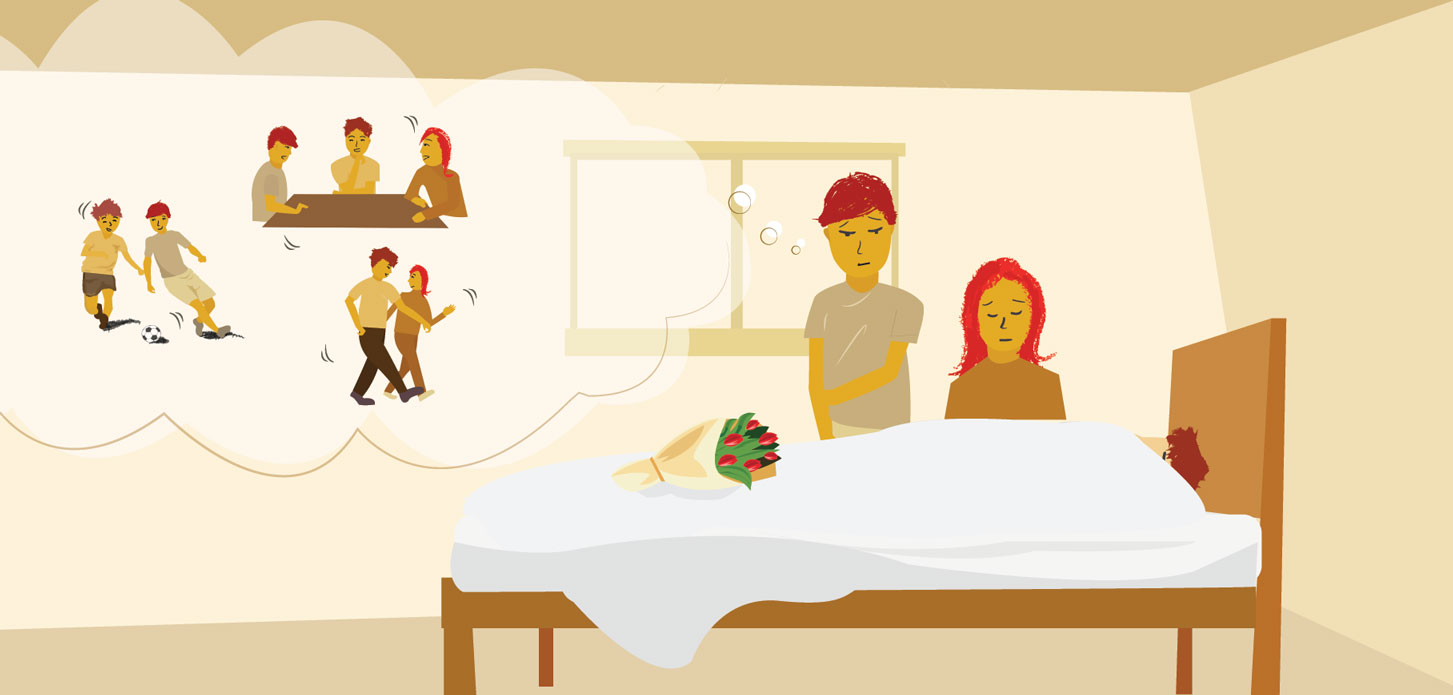
GRAPHIC: TAN ZHUO HUI
Death isn’t something I’m particularly familiar with.
And despite having fought the feeling of loss over the years, I still haven’t quite learnt how to deal with it.
At first, it was a taboo subject never to be raised during family conversations. At one point, I was told that death was punishment for the evil; at another, it seemed as though death was just about the biological disintegration of our thoughts, organs and skin.
Then, four years ago, my classmate passed away from a rare medical condition.
I rushed back from vacationing in Thailand for the last day of his wake, where I saw his still body in the coffin, his sunken cheeks devoid of the smile he always carried.
He looked pale; sick, so sick that I could barely recognise him. As his parents fought back tears beside me, I looked at him for one last time, through the thin sheet of glass separating life from death.
It was then that I realised I did not know how to deal with death.
I’d woken up to floating fishes in my tank and experienced my pet hamsters plunging off dining tables when I was a young kid. But this was different.
I was not particularly close to him, but it felt like he was just removed from the world.
As I dug deeper, I remembered him as an outgoing and inquisitive classmate who tried to solve all the
Math sums the rest of us could not.
I remembered how he often topped our class and cohort, then went on to secure a prestigious scholarship offered by NTU.
At that instant, death wasn’t a distant idea anymore. It was something that could happen to anyone at any time.
We all find our own ways to grapple with the idea of death and loss — some of us are guided by faith and religion, while others try to numb ourselves through the rigours of work and school.
One of my favourite poems by Sylvia Plath, titled Daddy, is about her coming to terms with her father’s death. She recalls her father as a daunting figure, and how she feared him as a child.
While dealing with death was a struggle, like Plath, I found a semblance of closure through writing.
On the plane back from Thailand, I wrote a short note for my friend, celebrating his death and how much joy he brought to our class. My hope was that he read it somewhere, somehow.
Sometimes, I also wonder how it’s like for parents to watch their child pass on.
When I was reporting for The New Paper last year, I wrote a story about a father who had never stopped texting his late son after he died in a car accident a year ago, hoping for a reply.
The pain hadn’t really gone away for the 60-odd-year-old. When I spoke to him about the accident that robbed him of his only child, he wept profusely.
During the hour-long interview, he had to take a break every five minutes, pacing around the kitchen to calm himself down.
He also took me to his son’s bedroom and explained how he left it untouched since the accident.
It was painful to watch a stranger hold on to a precious memory he could not bear to leave behind.
It has occurred to me that death often becomes a review of our lives, where only at wakes do we give eulogies of how great a father or son one is.
We don’t hear much about Mr Tan from down the corridor or Uncle John who serves coffee at the opposite block till their deaths.
And while we’re alive, we take the little things like affirmation and smiles for granted.
Death really isn’t a topic I am familiar with; one that I will never want to be familiar with. But what I have learned over the years is that we should not wait till death before we start to love.
In retrospect, I should have spent more time with my friend who passed on.
I should have thanked him for the things he did, even the simplest ones like helping me with homework, or keeping our classroom neat and tidy.
The words of American author Kurt Vonnegut sums it up — “Of all the words of mice and men, the saddest are, ‘It might have been.’”
Before we feel that aching sense of regret the next time we see a familiar face while flipping through the obituaries, let’s start by learning to love and appreciate everything we have.