


Previous Story
Going off the beaten track
Posted On 06 Nov 2017
Comment: Off
By Tiong Linshan
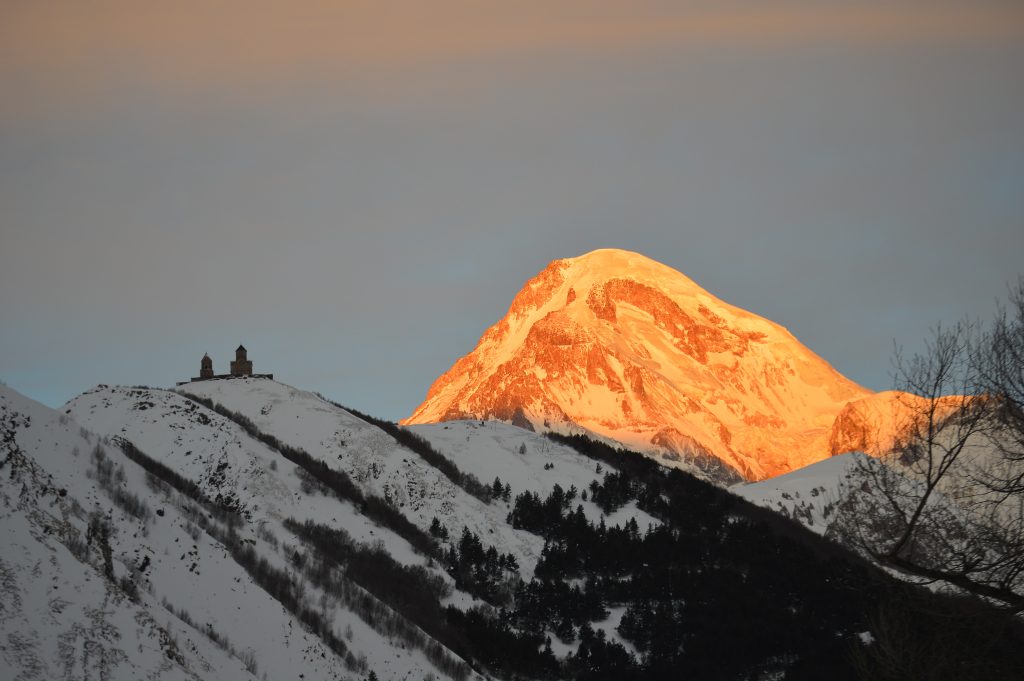
The Gergeti Trinity Church, which lies at the foot of Mount Kazbek, was built in the 14th century. PHOTO: GIORGI DOLIDZE
Not many students can say they have beach-hopped in Portugal, explored Georgia’s medieval villages, or joined hundreds of devout Hindus bathing in the holy Ganges.
NTU’s international students are a treasure trove of travel recommendations, and they are eager to inspire others to experience their country and culture.
Celebrating food and history in Georgia
Georgians take their food very seriously. If you ever find yourself in the wine region of Kakheti, try knocking on any vineyard owner’s door. You might end up with an invitation to supra — an elaborate Georgian feast replete with wine and local delicacies.
According to 24-year-old Giorgi Dolidze, who hails from the Georgian capital of Tbilisi, it is common for families to host supras every two to three weeks.
“Georgians are warm and inviting, especially to foreigners. They love being hospitable,” said the exchange student from NTU’s School of Civil and Environmental Engineering, who studies at the University of Limerick in Ireland. “There is a saying that goes: ‘A guest is a gift from God.’ Most Georgians families are always ready and glad to take in a guest.”
Dolidze added that the supra is a time-honoured tradition, which begins with a series of toasts that unfold in a certain order.
The first toast is to God, and then to Sakartvelo — Georgia’s native name. This is followed by a toast to peace, before ending with a toast to the host and guests.
“Every feast, we make about 30 to 40 toasts,” said Dolidze.
Some of the most common traditional dishes prepared for supras are khinkali (meat dumplings), khachapuri (cheese bread) and churchkhela (candle or sausage-shaped candy made with grape juice and nuts).
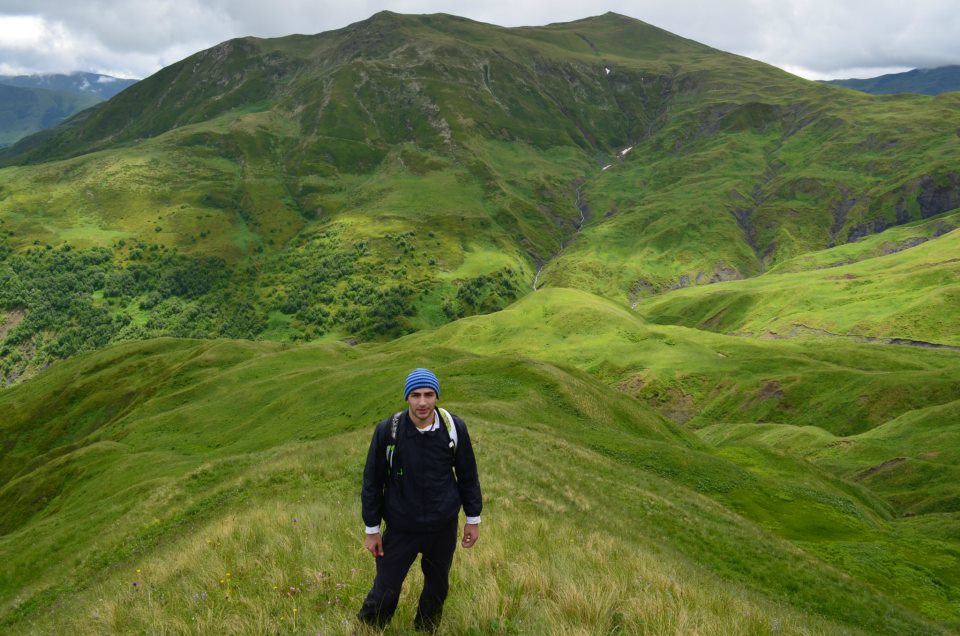
Trekking without any trails and marked paths in Khevsureti, which is famed for its Khevsur warriors, is for the lionhearted. PHOTO: GIORGI DOLIDZE
Georgia’s location at the crossroads of Asia and Europe contributes to the country’s eclectic mix of citizens, Dolidze said.
While most of the population is ethnically Georgian, minorities from Greece, Iran, Azerbaijan and Armenia make up about 12 per cent of the population.
Dolidze recommended exploring the maze of alleys and streets in the Old Town of Tbilisi, which still retains architecture from the country’s Soviet past — providing visitors a glimpse into Georgia’s history.
“You can see old churches, dating back thousands of years, and at the same time, Communist statues and buildings, as well as modern architecture with interesting infrastructure in the city.”
Beyond Tbilisi lies the Greater Caucasus mountain range — home to Europe’s highest mountain, Mount Elbrus, which stands at a staggering 5,642 metres.
Much of Georgia’s wilderness is left untouched, with fewer “trails and paths marked out”. Because of this, navigation can be challenging.
“Sometimes the only way to find paths is through looking for footpaths, asking passing shepherds for directions, or by using a compass and map,” said Dolidze.
On one particular trip to the Birtvisi Fortress, Dolidze trekked through mountainside villages, traversed canyons and crossed a river, before eventually reaching the fortress.
Ultimately, the mountain is home for him, as it reminds him of Georgia’s rich, medieval history.
He said: “When Georgia faced numerous conquerors such as the Mongols, Ottomans and Russians, the mountains were relentless giants hindering enemy advances.
“I always feel very proud whenever I go to the mountains.”
Going from coast to coast in Portugal
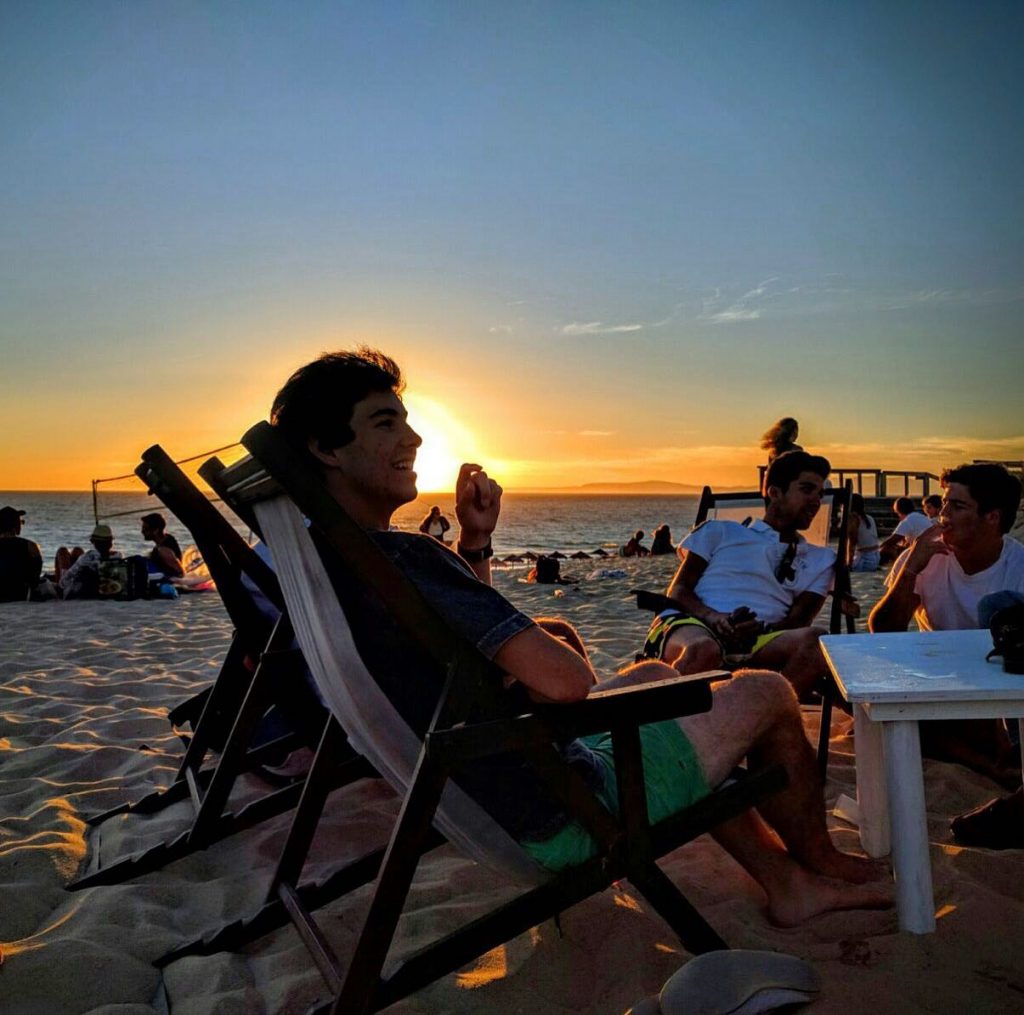
Catching the sunset by the scenic beaches along the Portuguese coastline is a
popular activity among locals and tourists. PHOTO: SANTIAGO DE ORIOL
Imagine having your own entrance to a private beach, with miles of sea stretching out before you. It sounds like something out of a novel, but it is Santiago de Oriol’s reality.
The 21-year-old Portuguese-Spanish exchange student from the University of Bath in the United Kingdom has spent many summers by the beaches right at his doorstep, in Cascais.
Located just 30 kilometres west of capital city Lisbon, the idyllic fishing village has over 200,000 inhabitants, and is a favourite summer haunt among Portuguese natives. Cascais was even inhabited by the royal family of Portugal from 1870 to 1908, during King Luís I’s reign.
Guincho Beach is a popular spot for summertime beachgoers. “If you feel brave, you can go cliff dive from the Casa da Guia Lighthouse,” said the third-year School of Social Sciences student.
During his summer breaks, de Oriol explored the many hidden beaches that pepper Portugal’s coastlines. He often discovered these beaches while driving, on unplanned detours from highways and roads.
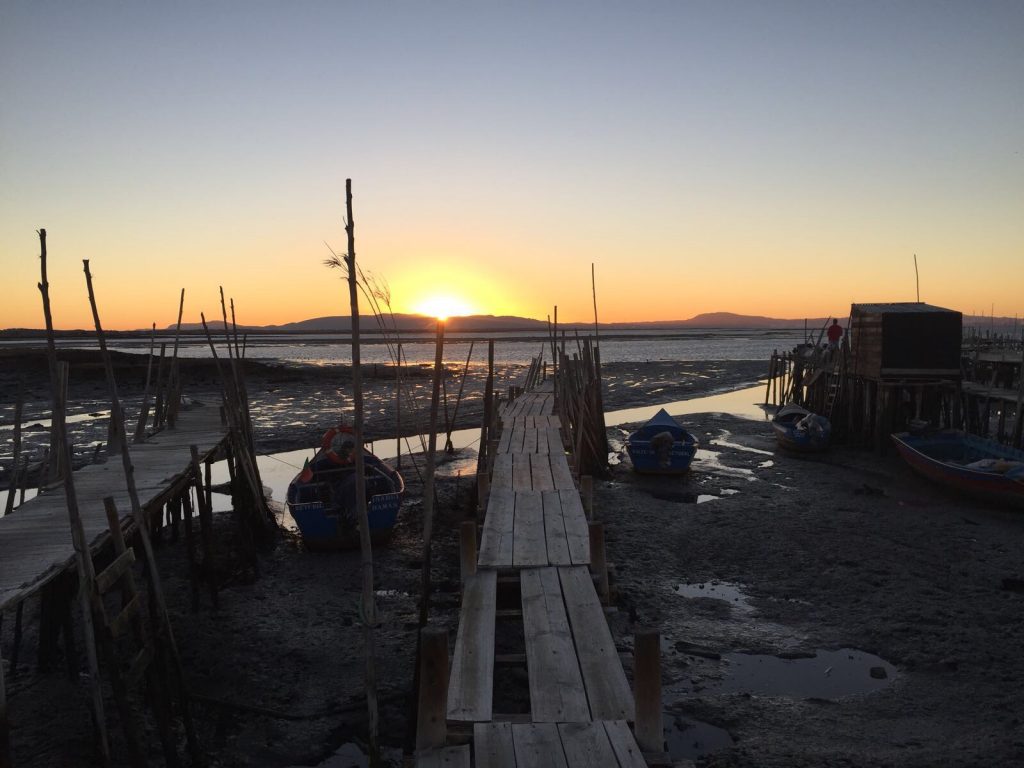
The traditional fishermen’s quay in Carrasqueira is set on wooden stakes and
stretches along the Sado River in the south of Portugal. PHOTO: SANTIAGO DE ORIOL
Porto Covo is another coastal village worth a visit. Located further south of Cascais, along the Alentejo coast, the architecture of this former fishing town stands out with its white-and-cobalt-painted houses.
As far as food is concerned, Singaporeans might find the local pastry of Lisbon, pastel de nata, all too familiar.
This flaky palm-sized pastry is more commonly known as the Portuguese egg tart. One famous traditional bakery known for this specialty is Pastéis de Belém, located next to the Jerónimos Monastery in the centre of Belém.
Located in the southwest of Lisbon, the bakery churns out up to 20,000 egg tarts daily using an original recipe that has been closely guarded since its establishment in 1837.
A stroll through the Alfama and Bairro Alto neighbourhoods in Lisbon reveals numerous fado bars tucked between alleys.
Fado — a Portuguese music genre that originated in Lisbon during the early 19th century— remains popular in Portugal to this day. The country’s largest annual music festival, NOS Alive, even featured a fado stage in July this year.
“Fado is very sad and nostalgic,” de Oriol said. “It’s what people who went on discoveries would sing on their boats when they missed home.”
Finding tranquillity in India’s rivers and mountains
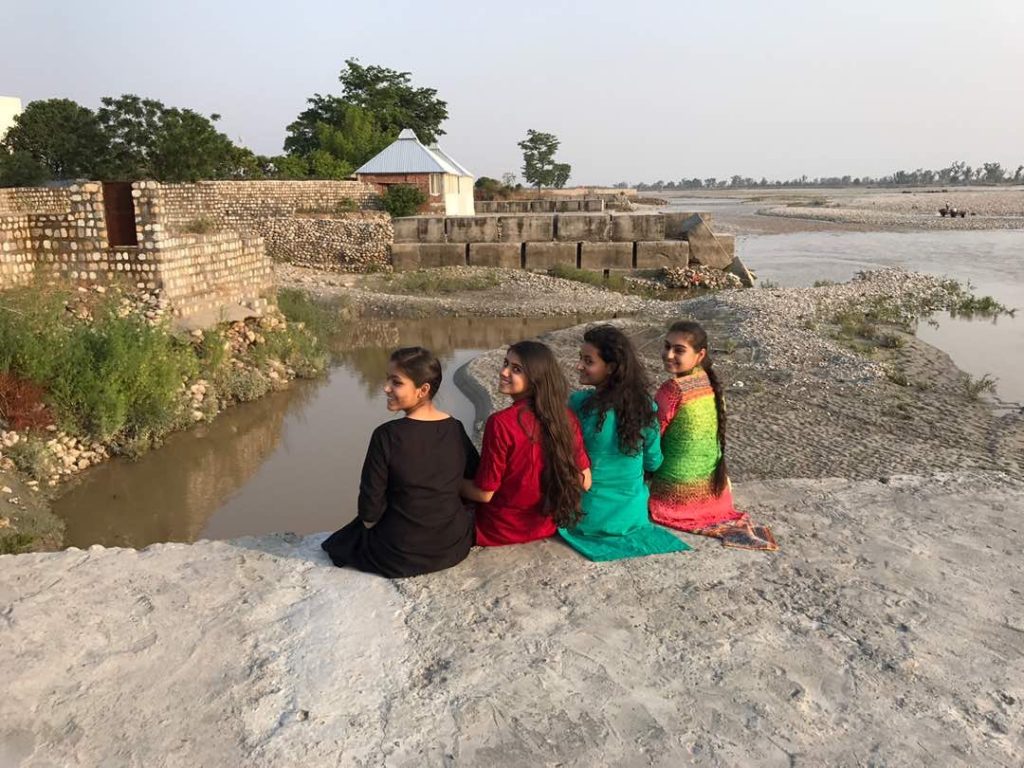
Samridhi Magan (second from left) with her friends in a quiet ghat far away from the city centre’s bustling main ghat Har Ki Pauri. PHOTO: SAMRIDHI MAGAN
Home is a six-hour flight to the Delhi airport and another five-hour drive away for Samridhi Magan, 17, a full-time international student from Haridwar.
Located in the northern Indian state of Uttarakhand, Haridwar is “a very religious city”.
“Most of the tourists who visit come to find spiritual awakening,” said the first-year Nanyang Business School student.
“In the main town, where the Ganges flows, you’re not allowed to drink — you can drink in the outskirts and you can sell (alcohol) in the outskirts only,” she added.
The Ganges River flows through Haridwar, making it a popular pilgrimage destination among devout Hindus.
According to Hindu folklore, Haridwar was one of the four holy sites in India where an immortal drink, amrita, was spilled from a pitcher, or kumbha, by the legendary Garuda bird. Hindus believe that they can attain spirituality and be cleansed by bathing in the rivers where the divine drink was spilled.
The best time to visit Haridwar would be right after Deepavali at the start of November, according to Samridhi.
Two weeks before Deepavali, city officials commence cleaning of the Ganges river beds and canals by way of a dam to stop water from flowing into the city. When Deepavali comes, the Ganges flows freely into the city again, and that is when the river is the cleanest.
When temperatures soar beyond 40 degrees on the hotter days, Samridhi and her friends usually head to the river for a dip in one of Haridwar’s many ghats.
Ghats are steps that have been constructed closer to shore for people to access shallower parts of the river safely.
Samridhi suggests veering away from the main ghat, Har Ki Pauri, in Haridwar as it is often overcrowded with bathers. “Find the smallest ghat possible…It’s more fun because you have the whole ghat to yourself,” she said.
The Himalayan region of Uttarakhand is a welcome change from India’s bustling cities for locals and tourists — with its rolling hills, mountain ranges and scenic views.
Uttarakhand’s proximity to the Himalayas means the snow-capped mountains can get crowded with tourists and climbers in winter.
In order to avoid the holiday crowds, her family chooses to travel to the mountains during the summer instead.
One of her favourite resorts is in the tiny village of Kanatal. For Samridhi, unwinding in a quiet Kanatal mountain resort is a yearly tradition she cherishes — it is one of the only times she gets to see her family of over 20 members, all at once.
Being in Kanatal with her large family provides a sense of peace that she does not get from being in the city, she said.
“Whenever we went, it felt like my family were the only ones there… it was always so quiet.”