


Previous Story
Just another solitary animal
Posted On 07 Sep 2016
Comment: Off
By Gowri Somasundaram
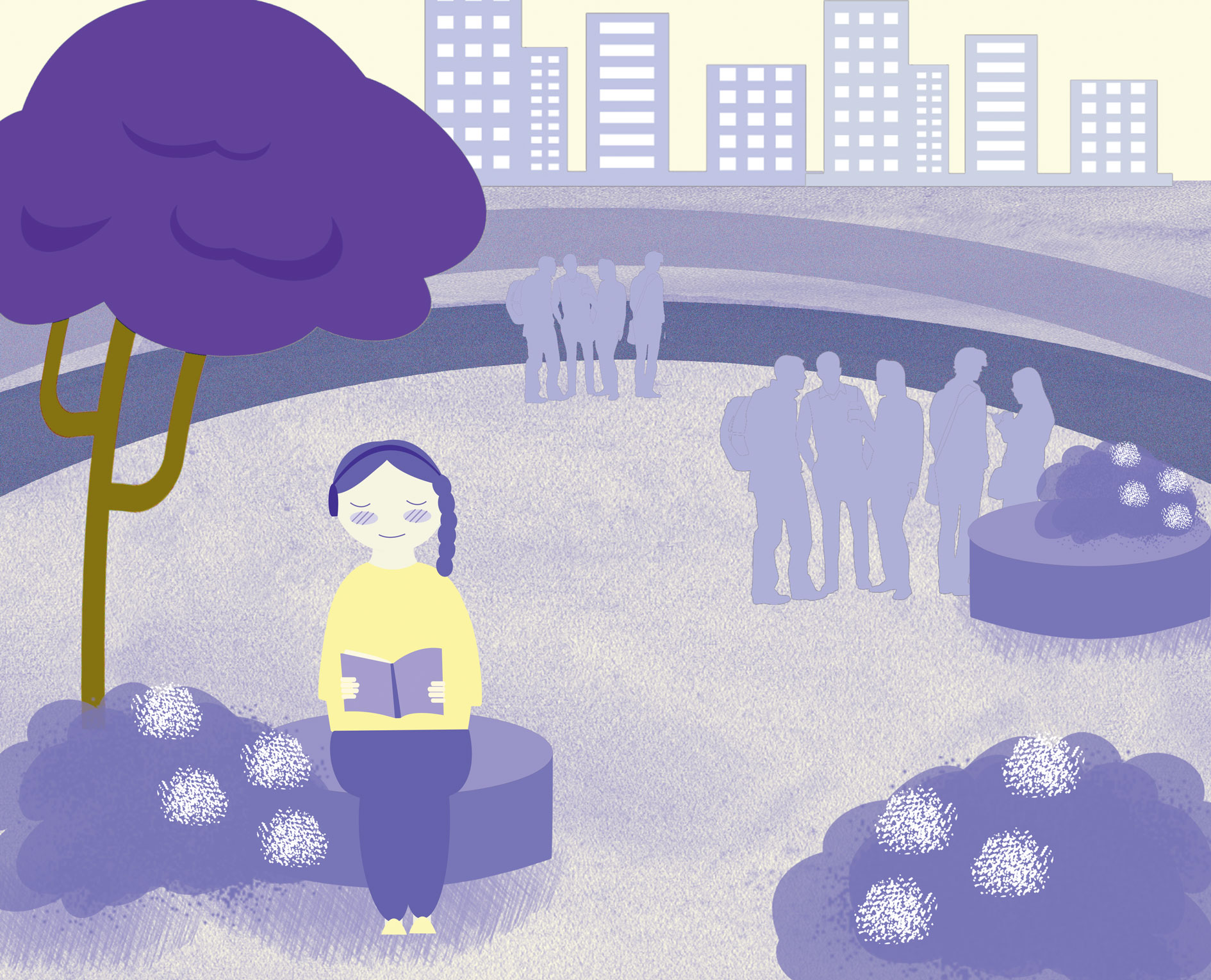
One of the questions I have pondered the most in my past two years at university is this: is it okay to be alone in public?
As someone who enjoys spending time in solitude, I find the very thing that brings me joy constantly being frowned upon by others.
Why are you always alone? Don’t you have friends? These are common questions that I get. But this leaves me wondering why there must be a correlation between having friends and being alone.
Being part of a group does not guarantee protection against loneliness. Similarly, the assumption that one is alone because they have no friends is also misguided.
For instance, the very idea of having a meal alone in school seems an unfathomable situation to many. I have even heard stories of people who would rather not have lunch than eat alone in school.
Are we so bothered with how others perceive us that we must deprive ourselves of alone time?
Even in the animal kingdom, the existence of solitary animals is acknowledged and accepted as natural. Many species, including cheetahs, jaguars, snow leopards and bears, are all classified as solitary, preferring to live in seclusion for most of their lives.
To science, this descriptor is neutral, factual. So for mankind – who some may argue are also animals – should it still be coloured with the negative judgement I have regularly observed?
Interestingly, spending time alone seems to be a trend that is here to stay. According to a 2015 Visa Global Travel Intentions Study, the number of first-time solo travellers more than doubled from 16 per cent in 2014 to 37 per cent last year.
Furthermore, the survey revealed that such travellers tended to have a set destination in mind but were more flexible with their itineraries — one of the best advantages of travelling solo.
This negative perception of people who frequently spend time alone is not something that is unique to NTU, or even Singapore.
This topic has been covered multiple times in news publications such as the Washington Post and the Huffington Post — which published an article titled “The Stigma of Doing Things Alone” earlier in the year.
It explores the assumption that we dislike and fear being alone, then points out the need for a “degree of confidence and initiative” in order to be comfortable in your own skin during “me” time.
However, this is not to say that the desire to be around others is bad — or about to die down anytime soon.
For some of us, being surrounded by people gives us the enthusiasm and energy to get through our day.
It is important to understand the significance of social connections as well as to be able to manage a healthy dose of it.
But, every coin has a flip side.
While it is rejuvenating to spend some time alone, there is scientific evidence, most notably by social neuroscientist John Cacioppo from the University of Chicago, which shows that spending excessive time by yourself can be detrimental not only to your mental health, but also to your physical state.
Are we so bothered with how others perceive us that we must deprive ourselves of alone time?
What then becomes crucial is knowing our personal state of mind, and striking a balance between recharging and spending quality time with friends and family.
In this regard, there is no one form of acceptable behaviour.
Everyone has personal preferences, be it being alone or hanging out with friends.
The best thing we can do for each other is to respect one another’s inclinations.
As I pen my first draft for this piece, it is 3am and I am alone in my room, but somehow I feel far from lonely.
This is when I am reminded of one of my favourite quotes by American poet Henry David Thoreau: “I never found the companion that was so companionable as solitude.”