


Previous Story
Modern History
Posted On 09 Nov 2014
Comment: Off
A new exhibition, Singapura: 700 years, looks back at the roots of the now first-world Republic. It opened at the National Museum in late October. Lifestyle Writer Rachel Chia highlights the exhibits that will delight museum-goers on their walk into the old days.
By Rachel Chia
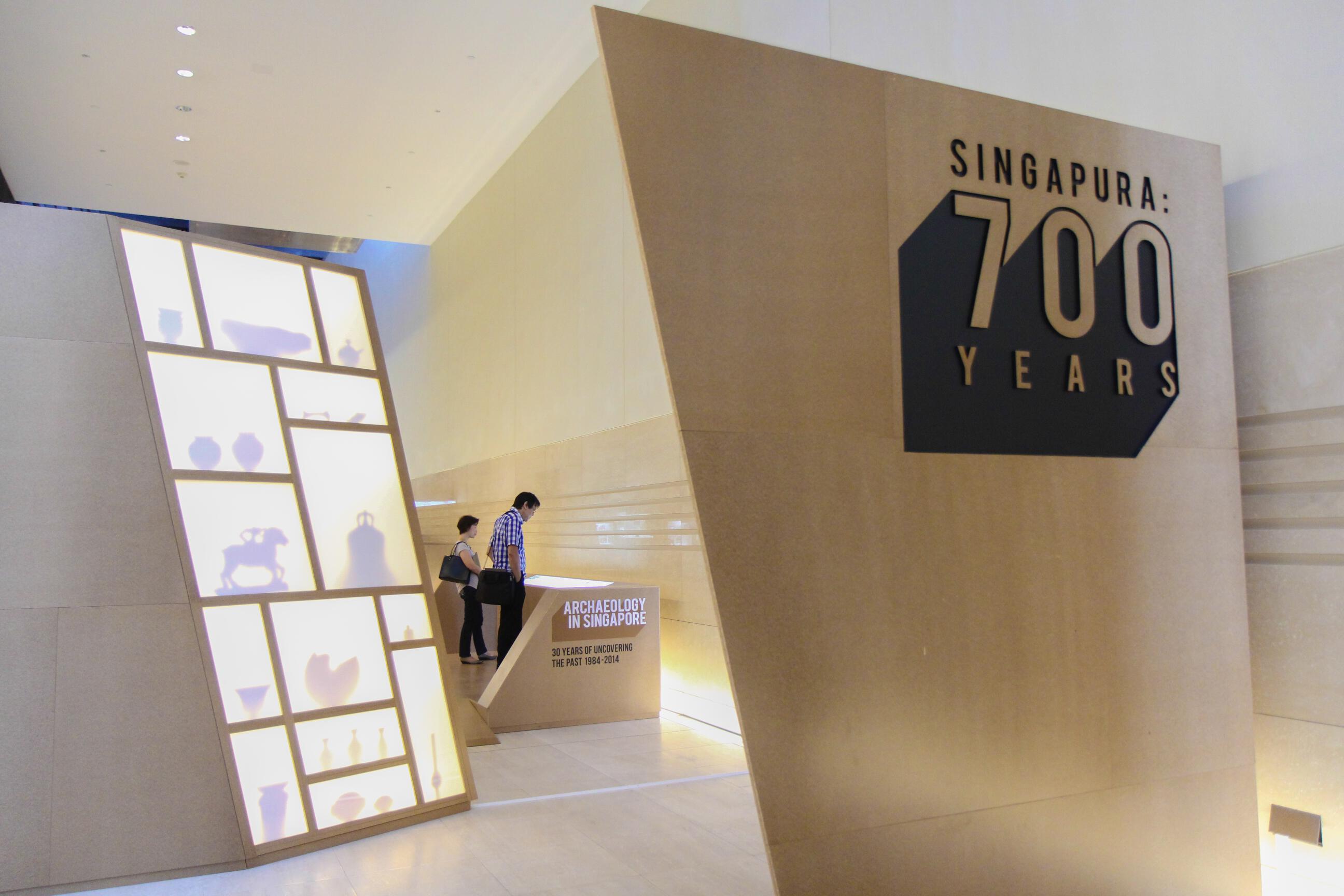
PHOTO: AUDREY KWOK
National Museum of Singapore
Exhibition Gallery 1 & 2 (Basement)
93 Stamford Road
S178897
Opening Hours:
Daily: 10am – 6pm
Price: Free for Singapore Citizens, Permanent Residents, and children aged six and below.
An indoor merry-go-round on artificial turf is an unlikely item for an exhibit on Singapore’s Independence era, but along with interesting finds such Occupation-era Japanese newspapers and nature drawings of Singapore’s fauna by William Farquhar, the island’s first Resident, this exhibition has them all.
Open till August next year, Singapura: 700 years lets visitors walk through seven centuries of the Republic’s history, accompanied by highly interactive exhibits.
Here are six displays in the exhibition that are worth checking out.
1. Archeology in Singapore
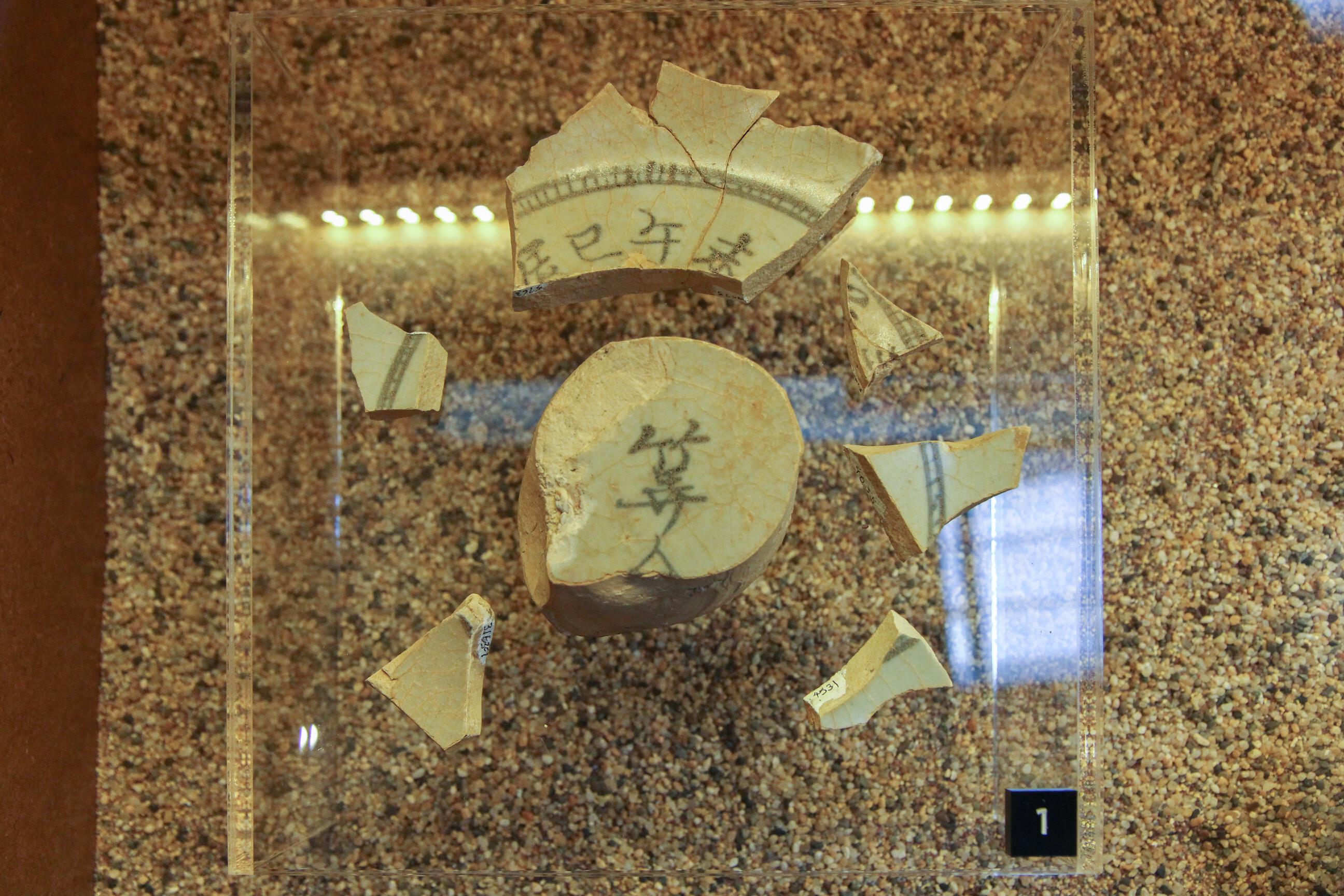
PHOTO: AUDREY KWOK
The archeology section features lesser-known excavated finds from Singapore’s ancient era. One highlight is fragments of a rare mid-14th century porcelain bowl compass from Fort Canning Hill, believed to be the only one of its type in the world to date.
Bowl compasses work by floating a needle on a cork in a bowl filled with water: the magnetised needle will point north when it reaches a standstill. Only fragments of the compass have been recovered, but Chinese characters for compass directions written on the glaze confirm that it was used for navigation.
Other unusual displays include the skeleton of a dog, glass shards from medicated oil bottles and an ivory toothbrush handle.
2. Ancient Singapore (1300 to 1818)
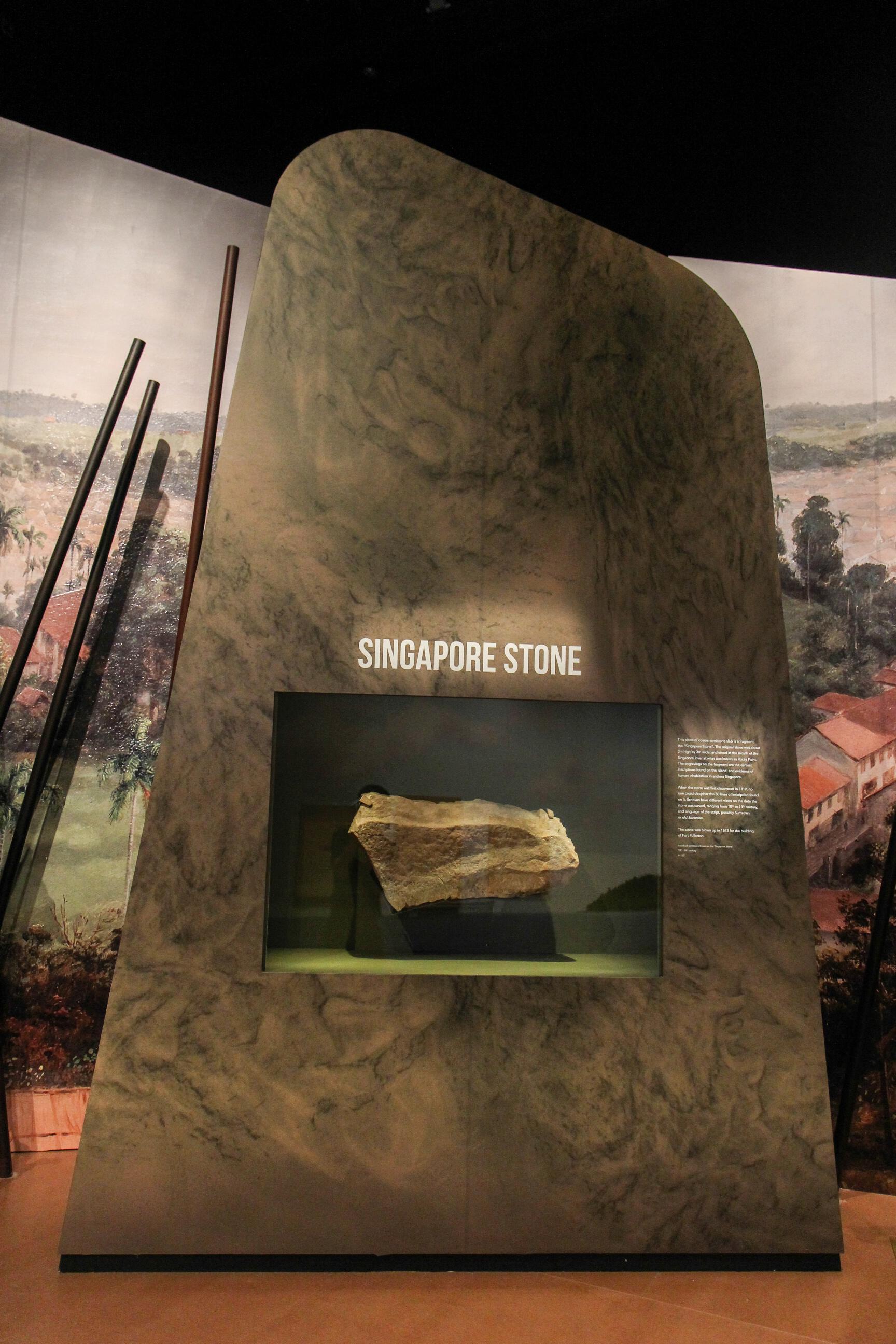
PHOTO: AUDREY KWOK
In this section, visitors can glean information from Ancient Singapore, which was ruled by a succession of five kings at a time when macaw beak and tortoiseshell were precious objects of trade.
The main attraction here is a two-foot-wide fragment of the Singapore Stone, a sandstone slab inscribed with an old text that has not been deciphered to date — but is suspected to be similar to ancient Sanskrit. The writings are believed to describe the island’s ancient history.
The Stone originally stood by the Singapore River, until it was blown apart by the British in the 18th-century to widen the river mouth. The fragment on display is almost 200 years old and was salvaged from the blast. Pale yellow and weathered-looking, its inscriptions are now only faintly discernible.
3. Colonial Singapore (1819 to 1942)
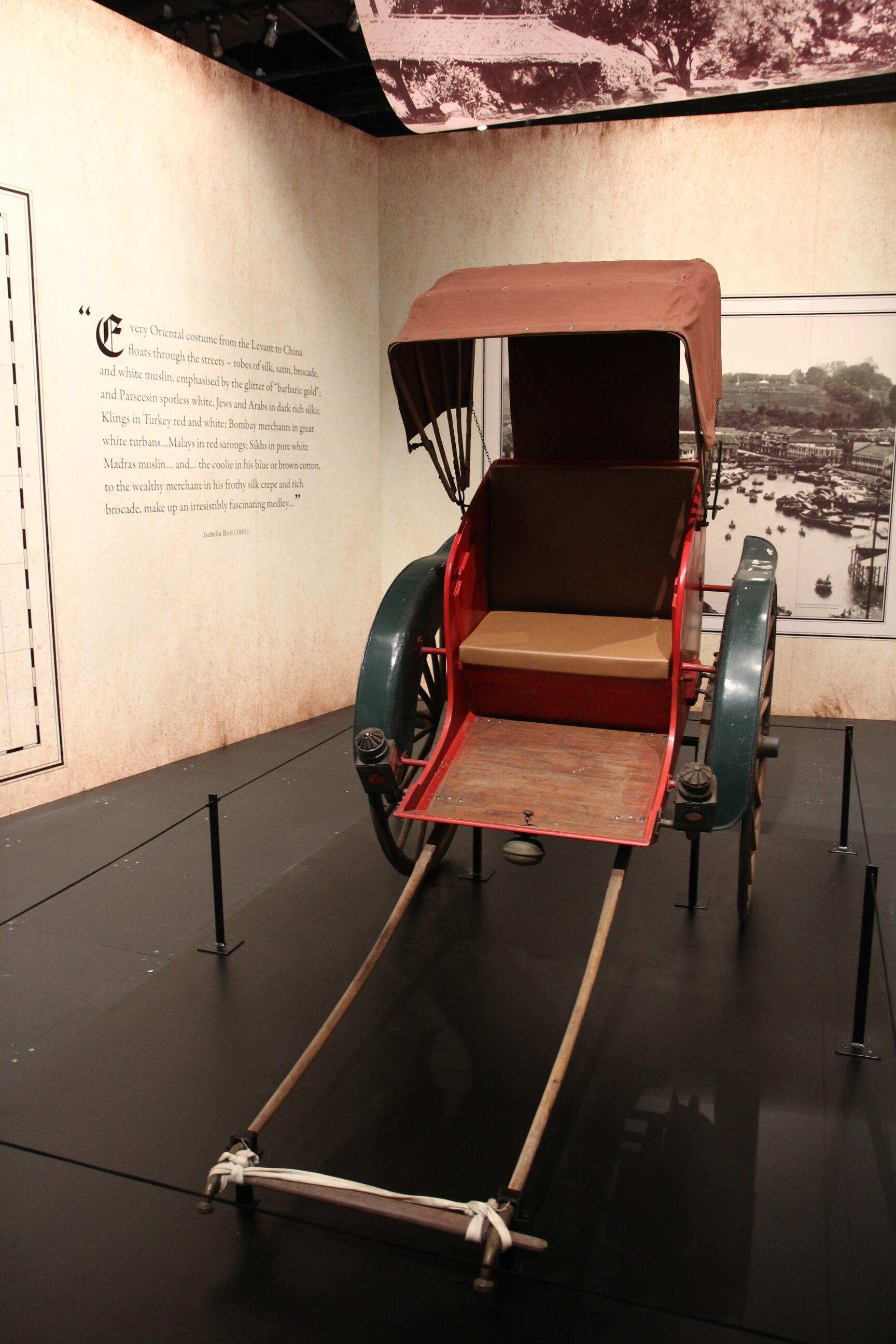
PHOTO: AUDREY KWOK
Colonial Singapore details the life of locals under British rule. Visitors can view a real rickshaw — a popular mode of transport then — preserved in surprisingly good condition. The rickshaw, which was pulled by hand, existed even earlier than the current bicycle-powered trishaws often seen in Bugis.
Even the foot bell on the rickshaw display remains intact. In the past, the foot bell was used by passengers to indicate when they wished to alight, by stepping on a switch near the footrest to trigger the ringing sound.
Unfortunately, because of the display’s rarity, visitors are only allowed photographs, but they cannot sit in it or ring the bell.
4. Syonan-To (1942 to 1945)
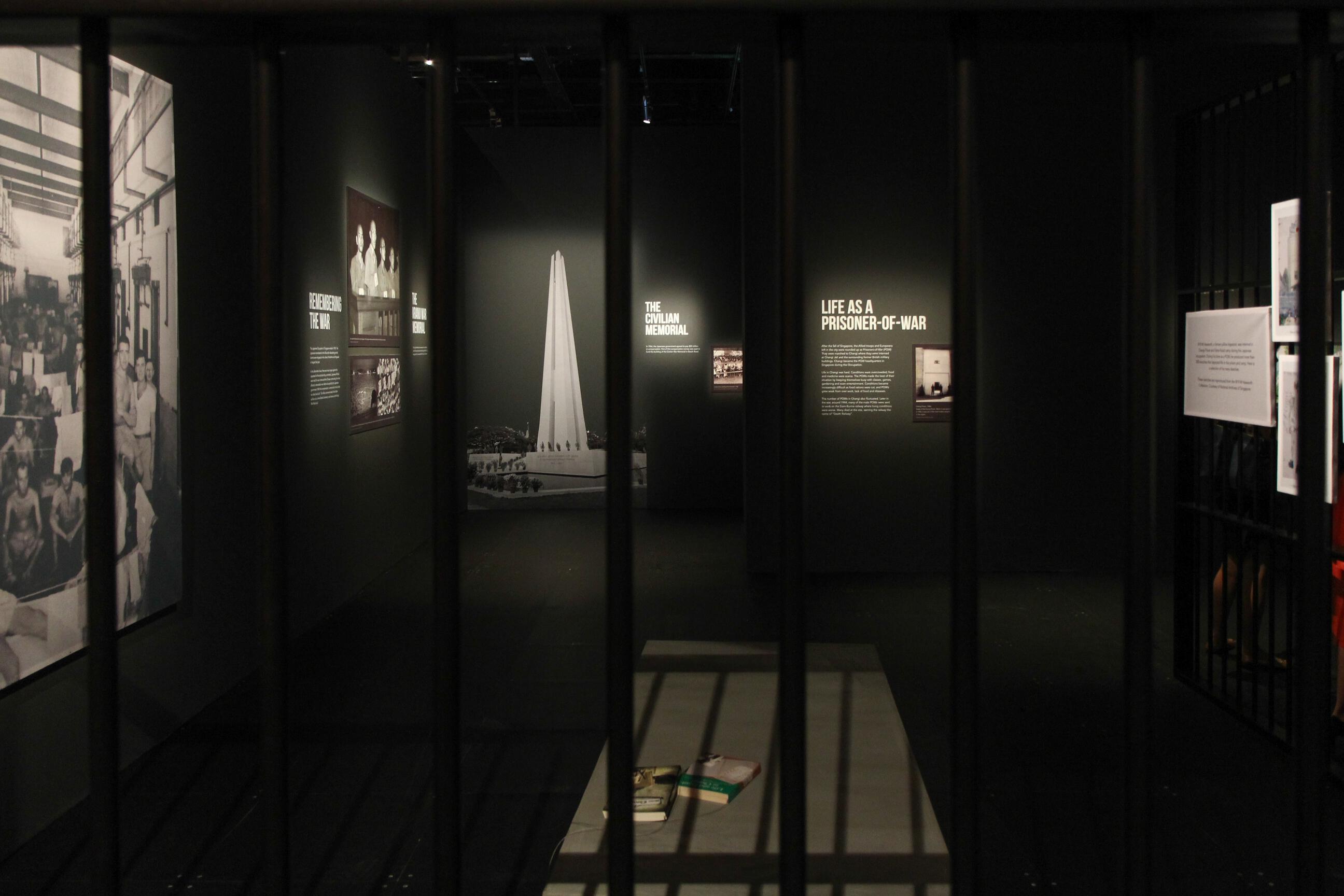
PHOTO: AUDREY KWOK
Black walls, hanging fighter planes and spotlights provide the sombre mood for this part of the exhibit, which documents the harsh lives of Singaporeans under the Japanese Occupation.
Visitors can sit on a bench behind black bars in an installation simulating the experiences of prisoners-of-war under the Japanese. Drawings of life in Changi Prison by former prisoner-of-war W. R. M. Haxworth are also on display.
Books on the prison experience, like Life and Death in Changi — the published diary of former prisoner-of-war Thomas Kitching — are also on display for the public to read.
5.Road to Merdeka (1946 to 1965)
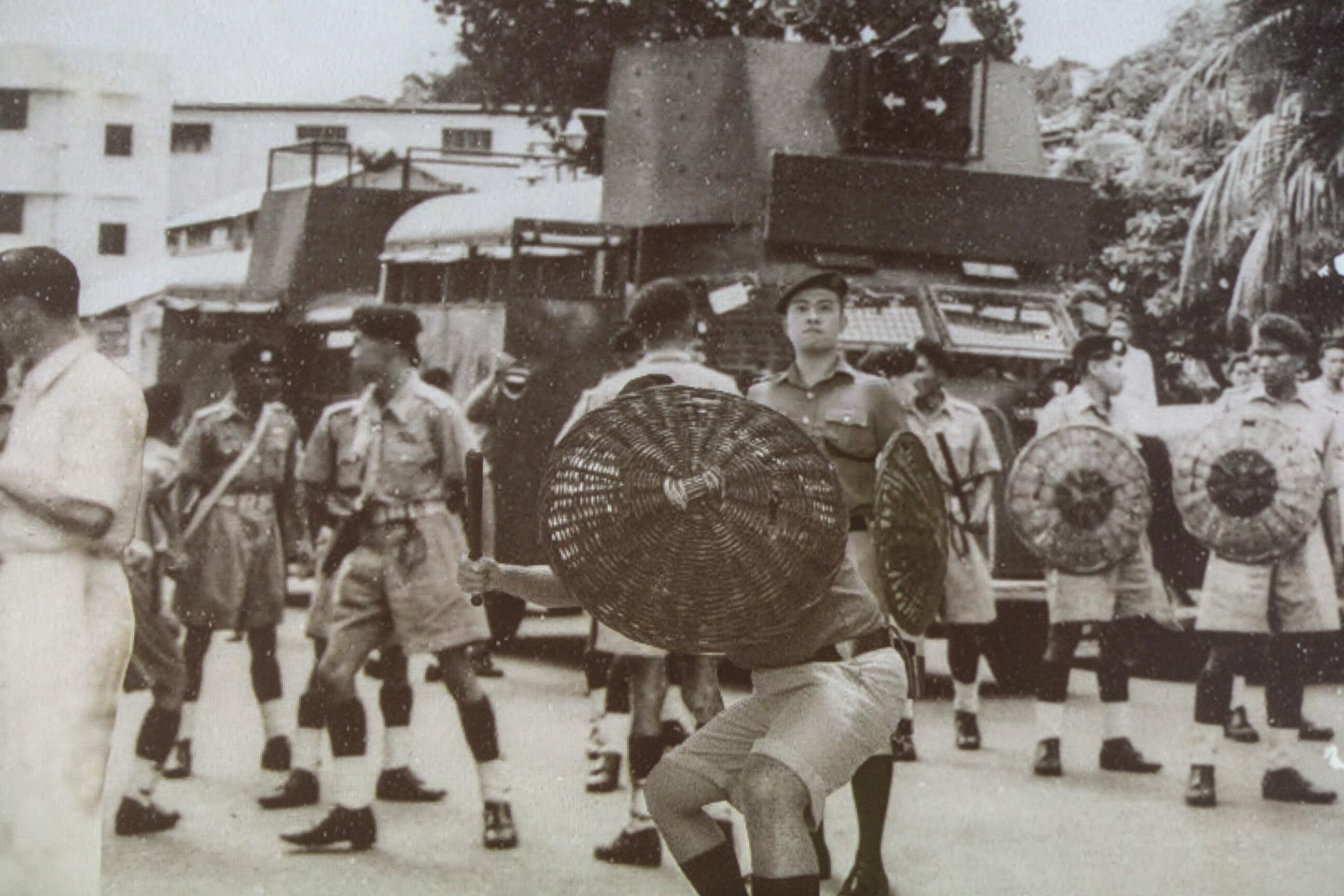
PHOTO: AUDREY KWOK
Singapore’s tumultuous post-war times are the focus of this exhibit.
Here, visitors are transported back to the first ever elections held in Singapore. In addition to fake poll booths where visitors can “participate” in the 1948 election, museum-goers can read the lyrics to an old, government-commissioned jingle, which encouraged Singaporeans to vote. Infographics on the number of seats won by the different political parties are also on display.
Recreating the experience of the communist riots, the walk into the Merdeka section is a narrow corridor with black and white images of early police projected onto the walls, accompanied by shouting noises.
The life-sized police projections, with stern expressions, shields and batons,are interactive: the number of personnel displayed increases with the number of visitors entering the area.
6. Independent Singapore (1965 to 1975)
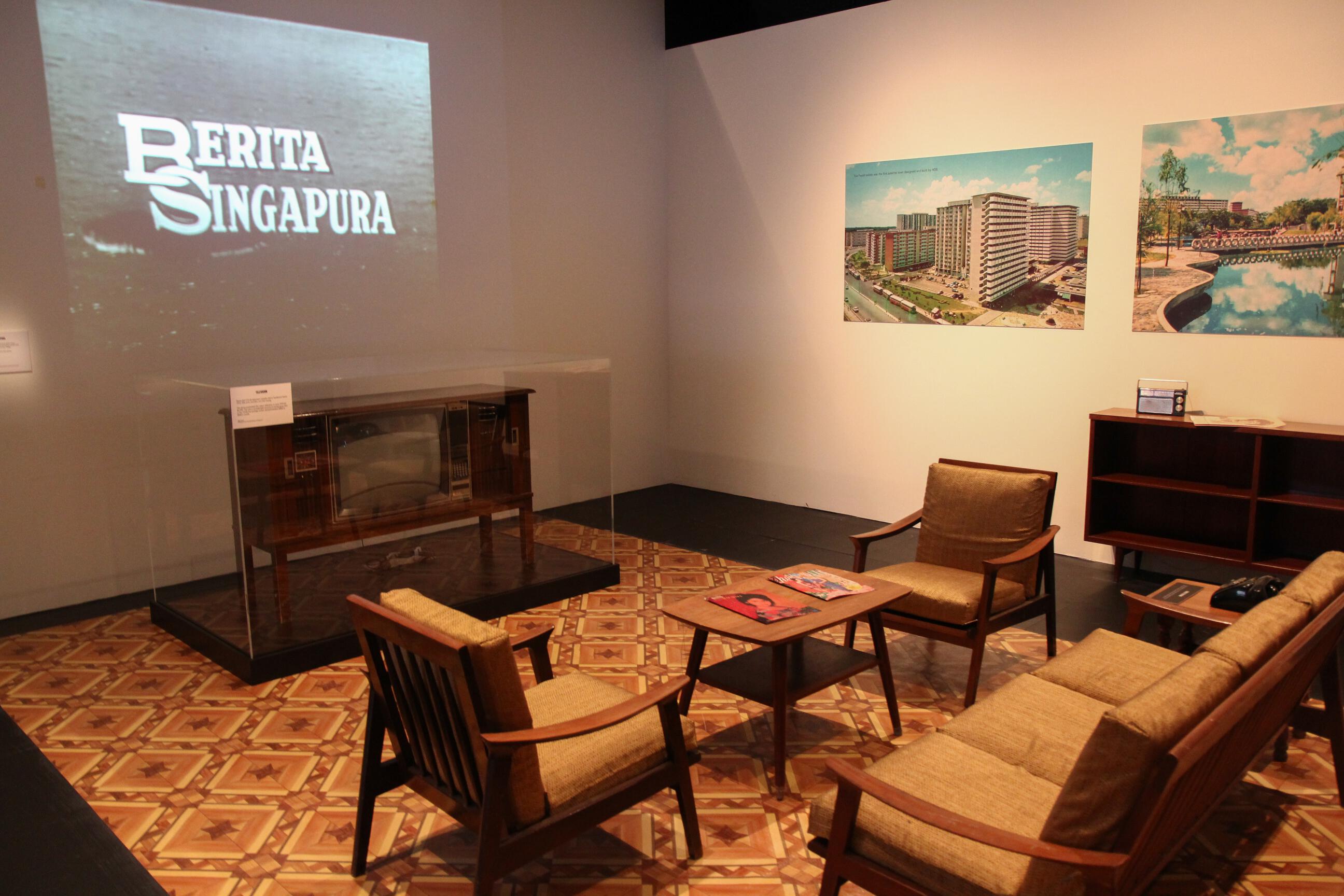
PHOTO: AUDREY KWOK
Inspired by the decade after independence, the three display areas in this exhibit centre around the first HDB blocks built by the government. They consist of a typical living room, a playground, and a void deck. Elements such as two older versions of the Singapore pledge, as well as old currency notes, also add to the spirit of independence.
Fans of the 60s will appreciate the living room installation, which includes copies of reproduced Her World magazines, old-style mosaic tile flooring, a rotary dial telephone, and a genuine vintage television.
Visitors can sit on the wooden sofa set to watch black and white excerpts about new housing estates from Berita Singapura, an old Singapore newsreel programme. Photographs from the 70s of life in the housing enclaves, like Toa Payoh at Night, are also on display.


