


Previous Story
Movie Review: Boyhood
Posted On 22 Aug 2014
Comment: Off
Richard Linklater’s latest film, Boyhood, paints a realistic portrait of life through the eyes of its young protagonist.
By Jared Alex Tan
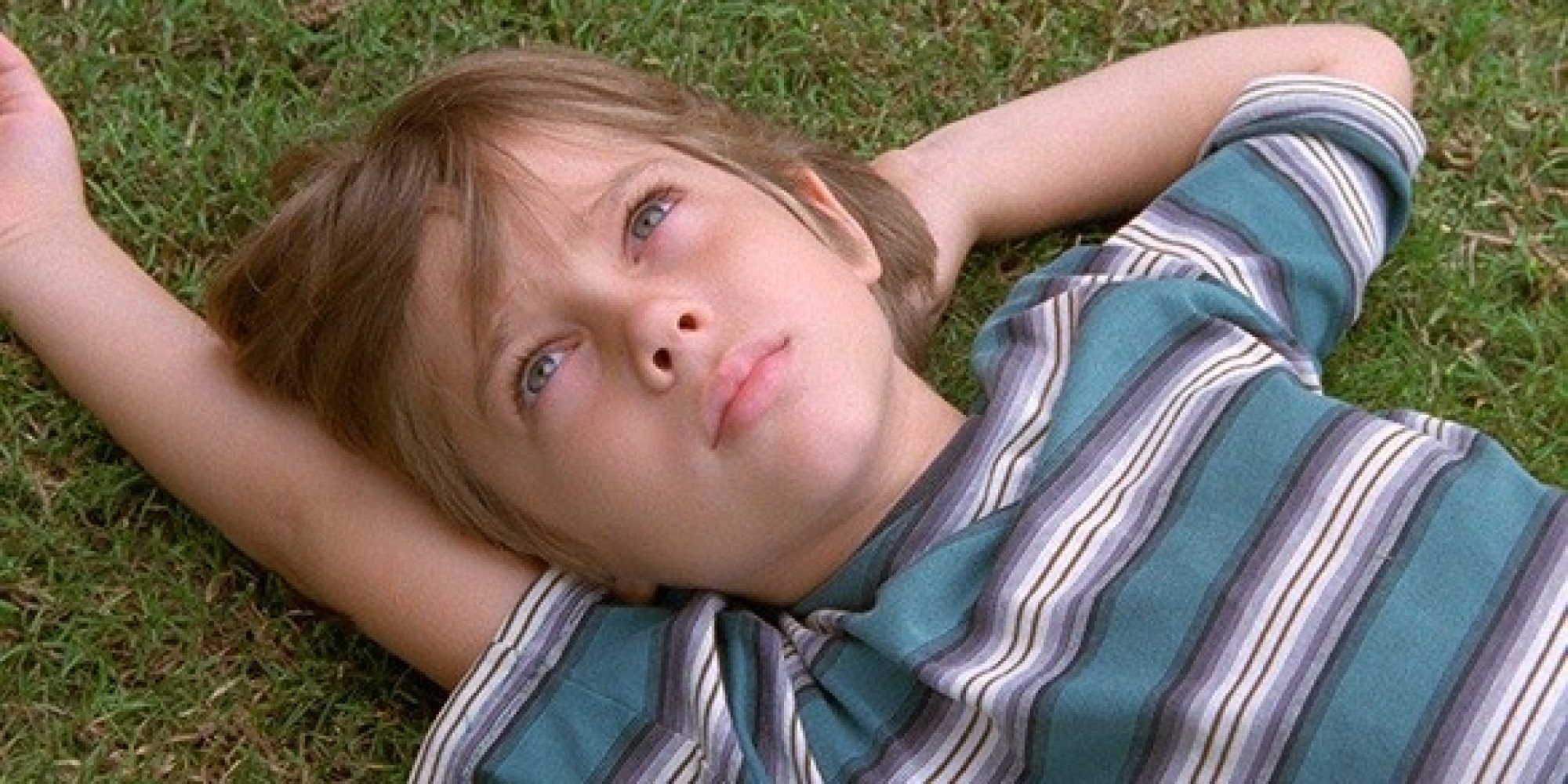
PHOTO: MATT LANKES/IFC FILMS
Boyhood
Drama [NC16]
Ethan Hawke, Patricia Arquette, Ellar Coltrane
166 Min
More than a decade in the making, Richard Linklater’s latest movie Boyhood concerns itself less with telling a dramatic story, and more with transporting audiences back to a simpler time in their lives.
People often forget that their childhood experiences play a significant part in making them who they are today, and Boyhood reminds them of the importance of those foundational years.
Filmed over 12 years from 2002 to 2013, Boyhood chronicles the fictional adolescent years of one Mason Jr. (Ellar Coltrane) starting at age six, and we follow him as he grows up in a single-parent home and experiences the quintessential milestones of youth, including sibling rivalry, going to school, and falling in love.
Boyhood captures the essence of the ordinary by its realistic portrayal of Mason Jr. as lower-middle class American boy.
Like most people in real life, Mason Jr. was significantly more animated when he was younger. The audience watches him detach from the comfort of living with his parents, and develop into an independent young man.
We see a genuine and believable growth of a millennial-generation boy — and those of us born in the same generation will find parallels to their own lives in the film. Mason Jr. raises thought-provoking points, such as how students expect college life to be one big transformation, but it doesn’t really occur.
Boyhood boldly defies the conventions of popular filmmaking. While a skeleton of events keeps the narrative in motion, the film does not possess a cohesive plot.
Interesting lengthy conversations about random topics also appear sporadically throughout the film. There is a five-minute dialogue between Mason Jr. and his photography teacher about the former’s work ethics, and in a later scene, an older Mason Jr. spends a long car ride discussing with his girlfriend the merits of deleting his Facebook profile.
The audience is often jarringly transported to the next part of Mason Jr.’s life without warning. In fact, there is no distinguishable beginning or end to Boyhood, although it does follow a linear narrative. At the end of its 166-minute runtime, there is no fairytale conclusion to Mason Jr.’s story — it ends just before he is on the brink of adulthood.
It is a humbling reminder that life is not defined by a single story — it moves ahead constantly, whether or not we are ready for it.
What Linklater has done with Boyhood is no easy feat; there are countless unforeseeable factors that could have compromised the entire film. Advances in filmmaking over the 12 years could have resulted in inconsistent visual quality, and even a single actor deciding to quit the project would have been problematic.
Linklater has masterfully weaved 12 years of seemingly unrelated stories together to create something that resembles a homage to the beauty of life.

PHOTO: IFC FILMS
Despite having no prior acting experience, Ellar Coltrane and Lorelei Linklater, who play Mason Jr. and his older sister Samantha respectively, are absolute naturals on screen.
There is an early scene where the siblings learn that they have to move out of their childhood home, and while they do not explicitly portray it in physical action, the two skillfully and subtly convey disappointment through the looks in their eyes.
This is impressive, considering how young they both were when they started (six and nine-years-old), and it is interesting to see their acting evolve as the film progresses.
Seasoned actors Ethan Hawke and Patricia Arquette round up the main cast as Mason Jr.’s divorced parents. As a single mother who was forced to grow up too quickly, Arquette lends a certain sense of vulnerability to her performance, while Hawke’s general enthusiasm for life lights up every scene he is in.
Given that the four actors worked with each other over 12 years, there is a genuine bond between this fictional family, and the authenticity of their relationship is evident on screen.
There are a bevy of other characters that appear in Boyhood, but most come and go without making significant impact. While this might be a red flag for more conventional films, the intentional mix of characters seems to be an accurate reflection of how groups of people constantly come and go in reality.
For all its praises, however, it should be noted that Boyhood is definitely not a movie for everyone — the film’s unconventional narrative structure, coupled with a runtime of more than 2.5 hours, might be off-putting, especially for those seeking a more casual movie experience.
Those willing to give Boyhood a chance, however, will be rewarded with a unique movie experience that has been one of the year’s most heartfelt and honest films.