


Previous Story
To post or not to post on social media
Posted On 31 Oct 2016
Comment: Off
By Prisca Lim
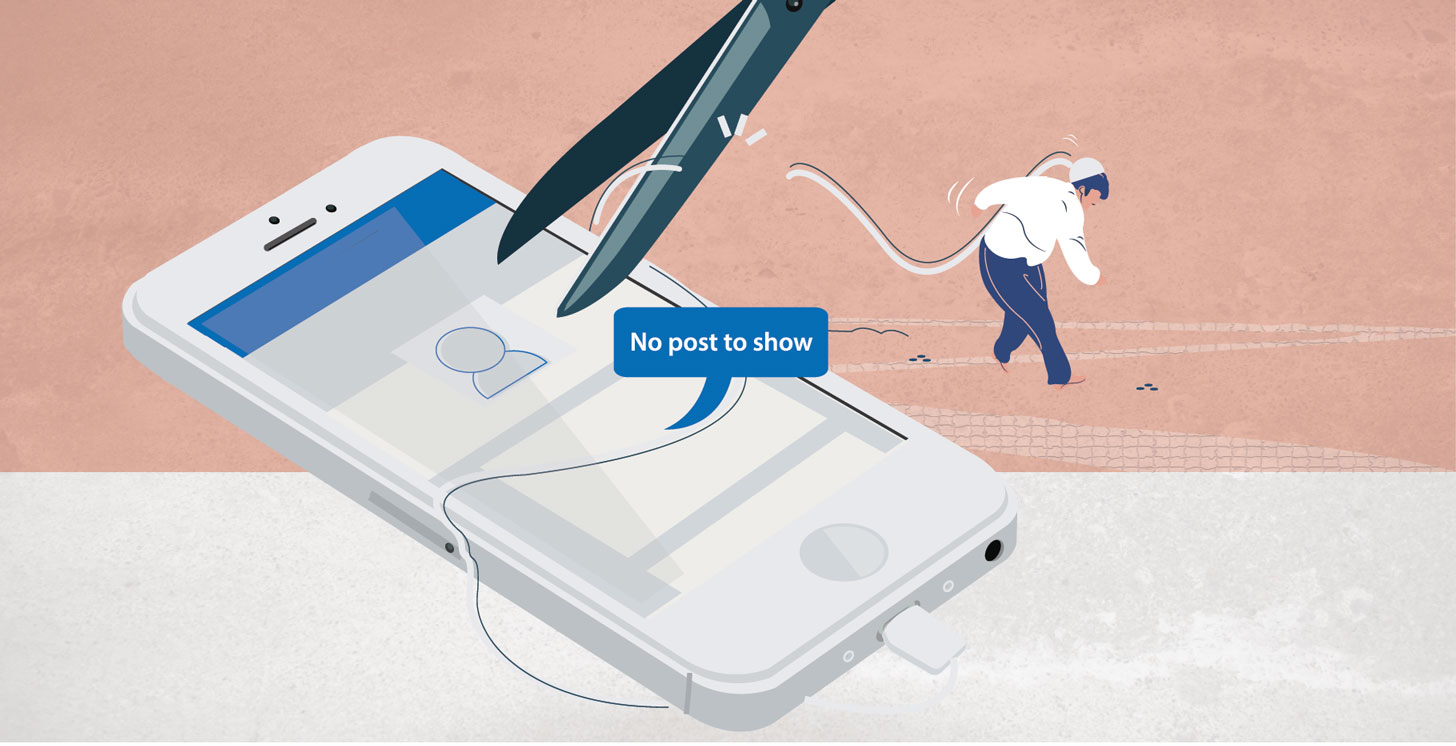
GRAPHIC: FIONA SIM
The last post on my personal Instagram account dates back to Dec 2013.
This may sound strange, especially in a day and age where most of my peers have an active presence on their social media accounts.
My friends used to get slightly frustrated when they realised I stopped posting photos online.
They did not understand why I chose not to, and nudged me from time to time to post something. But they have since gotten used to my absence on social media.
At times, however, I do feel guilty as I do not share as much information on what is going on in my life as compared to them, but the hassle of documenting every “momentous” occasion turns me away.
Part of me dislikes having to account for my life on social media, while another part is simply too lazy to maintain my accounts on a regular basis.
Yet, while my social media accounts are largely inactive, I do spend some time on Facebook, Snapchat and Instagram every day.
Some people would describe this as being a “social lurker”.
I prefer to share details of my life only with close friends, rather than acquaintances whom I’ve had the affinity of crossing paths with.
It is common to meet new people in life regularly, and while I agree with the importance of building a social network for future career purposes, I prefer to keep a distance with acquaintances.
This is even though I recognise that having a limited social media presence can come at the cost of maintaining social networks and certain friendships.
In today’s day and age, the widespread prevalence of social media sites has even transformed them into an important personal branding tool.
First impressions are made digitally, often without our knowledge, and like it or not, social media posts are now an important way employers judge and evaluate potential employees.
A survey by JobsCentral in 2012 found that three in four employers screen their job candidates online before making hiring decisions.
At the same time, posting on social media now is in itself a kind of art, where posts are often carefully crafted and brandished like a badge of honour.
But while posting on social media is often an orchestrated move, posting an appropriate amount of content can be a fine line to tread.
For instance, selfies, photographs of meals, and documenting of fitness regimens can be off-putting when shared indiscriminately, and sometimes even considered by some to be “spam”.
Hence, selective self-presentation and curation of content seems to be key to navigating the social media world successfully.
Recognising this, a number of people around me have more than one account on each of their social media sites.
For example, they would have one official Instagram account with a public setting, and another private one to post trivial content deemed inappropriate for those outside a selected group of followers to view.
This allows for the projection of a consistent online persona, and at the same time is an attempt to prevent potential oversharing.
An obsession with posting excessively on social media can be debilitating to one’s mental health, as the pressure of keeping up with social norms and the fear of missing out can cause social anxiety.
A 2014 study in the Journal of Behavioural Addictions found that higher social media usage correlated with anxiety and sometimes even depression.
This is amplified when people get too caught up with the idealised reality shown by others on social media and compare their lives to it.
Based on research done by bimonthly psychology literature magazine Psychology Today, the fear of missing out can result in self-identity problems, loneliness, poor self-image, feelings of personal inadequacy, discontentment with life, disconnection from others and even jealousy.
Yet at the same time, research on neurophysiological reactions found that positive affirmation derived from social media posts can be beneficial for self-esteem.
People who already had high self-esteem are the ones who benefit most, as they usually post more positive updates and receive more positive responses, according to research published by peer-reviewed journal Psychological Science.
In contrast, those with low self-esteem tend to post updates that are negative and will ultimately serve to work against them.
What this means is that making decisions on what and when to post on social media is a complex process, with consequences that are not straightforward as some may think.
Also, what we need is an ability to consume information from social media sites with a critical eye.
I’d like to believe that not revealing too much on social media is imperative to a healthy social media presence.
After all, what is more interesting than getting to know a person better the old-fashioned way — through a normal face-to-face conversation?